


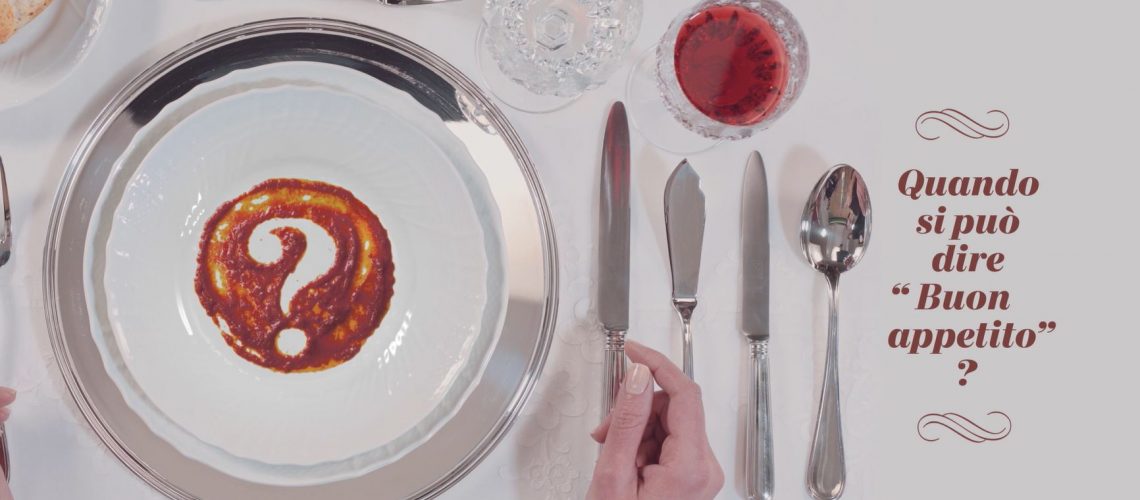
of

Italians, that thin red thread between bon ton and well-being at the table

fonte-Rumors.it_

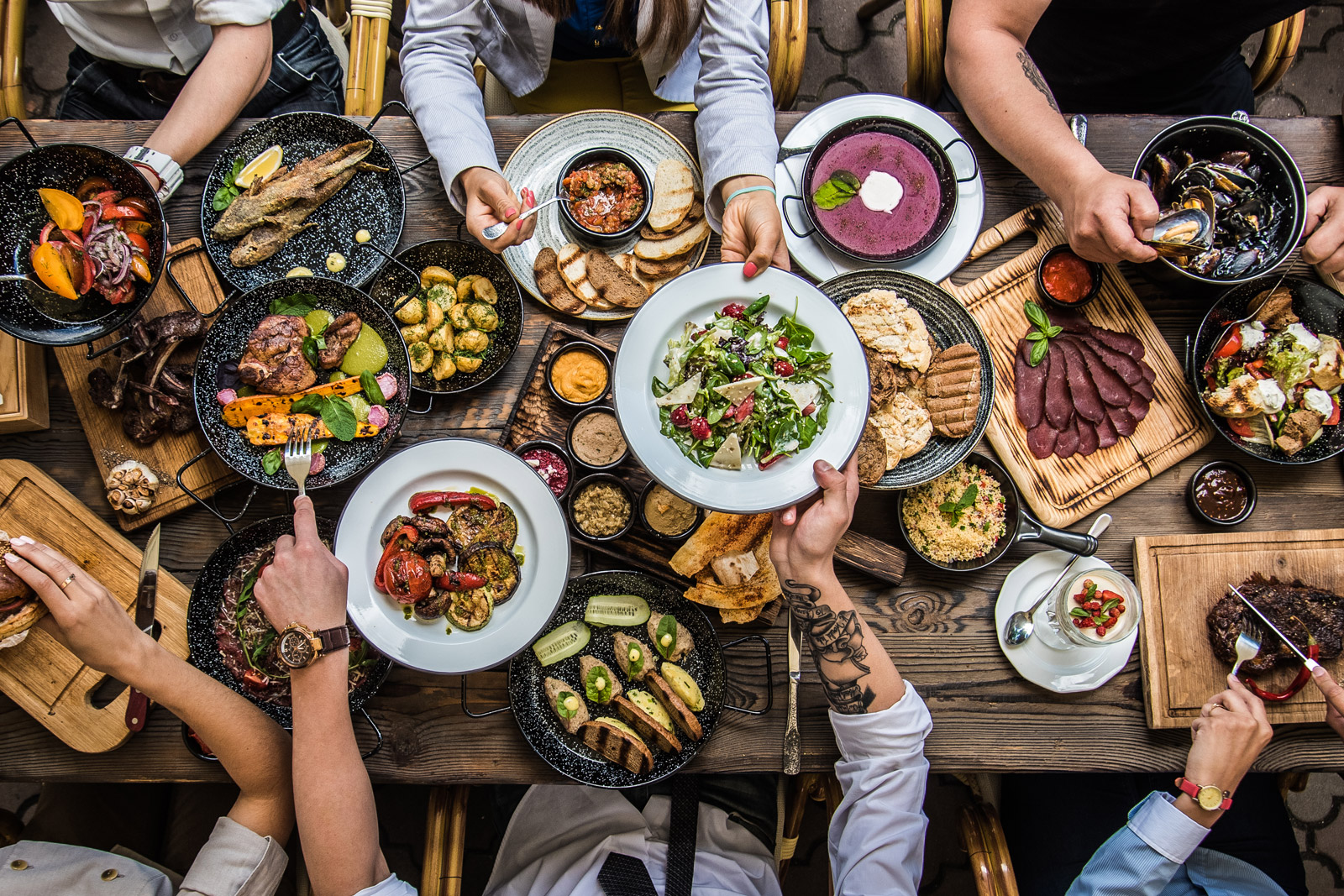
Bon Ton: not only form but also substance. Nestlé research shows how Italians creatively interpret etiquette at the dinner table, thus moving away from the intrinsic meaning of some of its rules related to proper nutrition.

The results of the research on etiquette

Does good table man ners still exist? Research commissioned by Nestlé on table etiquette has revealed Italians with bad habits, creative interpreters of the unwritten laws of bon ton, forgetting that many of them have a definite meaning beyond good manners. Rather than having drifted away from good table manners, therefore, it is more accurate to say that we have drifted away from our memory the fundamentals of healthy and balanced eating that are often hidden behind precise educational norms.

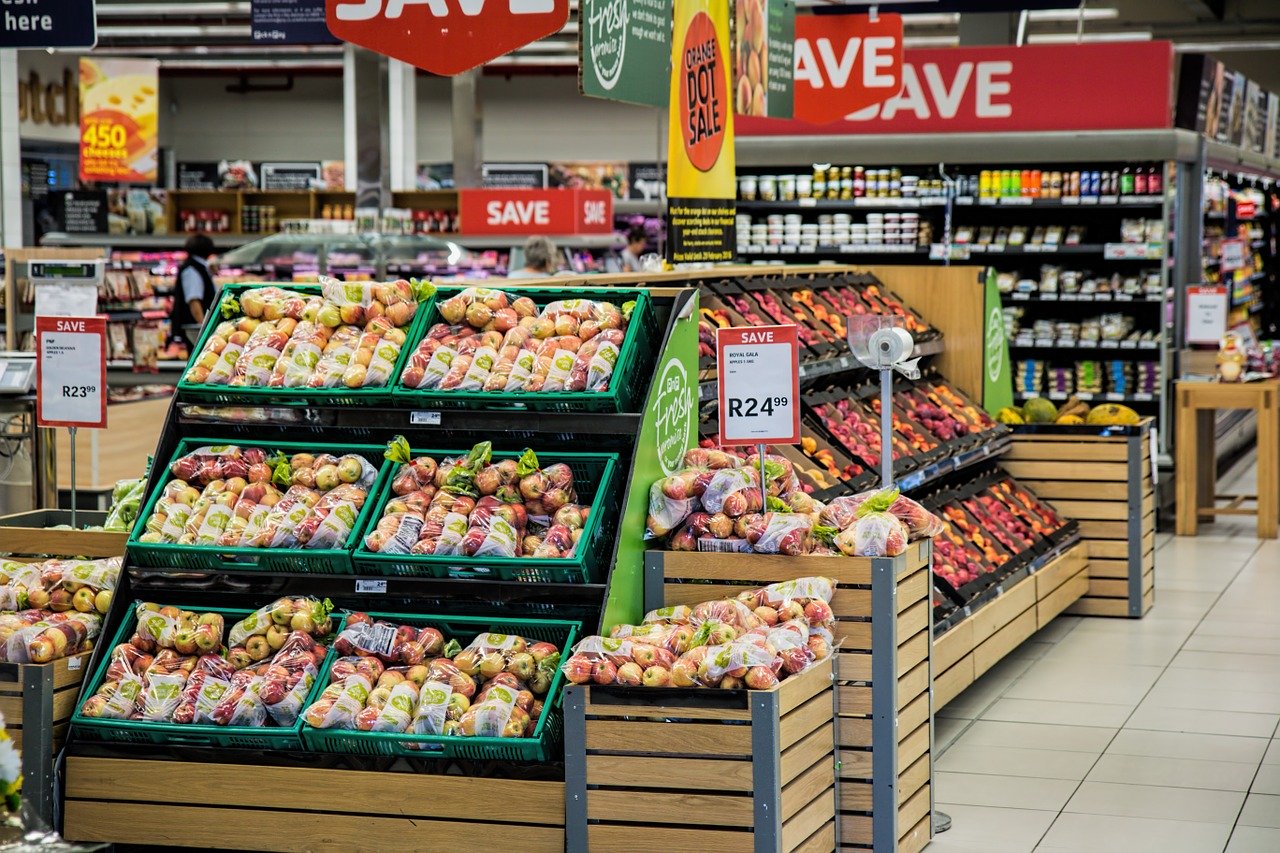
Take for example the old rule that it is not good manners to advance food on the plate. The 30% of Italians do not think this is a display of discourtesy at all: it follows that not only are we not as polite as we think, but we have a real problem with portions, which are often disproportionate to the real need.

On the other hand, about 1 in 3 Italians say they do not mind taking too large portions when dining with guests. Thus, not only is the basic principle of healthy and balanced eating that calls for portions in relation to lifestyle being ignored, but a more contemporary etiquette that deprecates excess in favor of a greater respect for the environment that dislikes waste is also forgotten.

Dr. Giuseppe Fatati, president of the ADI Foundation, comments.: “The scientific community agrees that the mere sight of the abundance of food on one’s plate influences one’s desire to consume it; consequently, it would be better-both as a matter of courtesy and to avoid unnecessary binge eating-to allow oneself moderate portions and, also out of a respect for the hospitality of others, to accept an encore only after one has finished what one has on one’s plate, rather than risk leaving leftover food or getting up from the table with an overfull belly.”

What about the “slipper?”

Probed and filed instead the “slipper.” That one absolutely can’t be touched! Almost as if it were an institution in the unwritten manual of nutrition. Rude or not, 30 percent of Italians even though they have leftover food on their plates, they do not give up the scrap. After a good pasta dish, for example, scooping up the dressing with bread only adds more calories to an already amply full meal.

Also among the behaviors probed by Nestlé is the controversial use of salt at the table. According to etiquette, in fact, it can be considered a demonstration that the offered food is not appreciated. But again, 45 percent of the sample surveyed believe that adding salt to the table is not a problem. In this case, therefore, we prove to be not only rude but also uninformed about the new recommendations.

For Italians, there are unavoidable rules

Here are three actions we love to take before we sit down to eat:

  • washing our hands for 89%;
  • wishing good appetite for 65% (but wasn’t it stipulated that it was rude?);
  • drinking a glass of water for 34%.

Moreover, the research would reveal that the epitome of good manners and good manners, for as many as 75 percent of respondents, is eating with their mouths closed, which would be followed by the habit of leaving cell phones away from the table (64 percent) and turning off the television during lunch and dinner (46 percent). Dr. Fatati expresses doubts here: Unfortunately, it is not known whether these are good intentions or whether concretely resolutions are being kept. One would be forgiven for thinking that the last two points are not very much in line with the observed bad habit of ‘non-conviviality’ that sees increasingly quick, frugal and isolated meals rather than relaxed meals in company that besides being good for your health are certainly good for your mood!”

Conclusions

All in all, we are not doing so bad. While Nestlé’s research highlighted some flaws in our education at the table and consequently the lack of information on very important nutritional issues, it had the merit of pointing out the cracks in some hitherto unassailable rules.

What if in 2018 it was time to rewrite etiquette? At least in part, to make it adhere to a more ‘holistic’ vision in which courtesy and well-being, healthy eating and care for the environment make up different sides of one universal coin.

FEATURED SPECIALISTS

  • Profile picture of Dr. Monica Gamba
    active 5 years, 8 months ago

    Aesthetic Doctors, Plastic Surgeons, Basic Doctors

    • Viale Radich 21/N - Grugliasco
    phone
  • Profile picture of Dott. Giovanni Adamo
    active 5 years, 8 months ago

    Angiologists, Basic Doctors

    • Provincia di Ragusa - Ragusa
    phone
  • Profile picture of Dr. Giuseppe Lepore
    active 5 years, 8 months ago

    Dermatologists, Basic Doctors, General Surgeons

    • 19 Via Manzoni Alessandro - Garbagnate Milanese
    phone
  • Profile picture of Dott.ssa Carmela Tizziani
    active 5 years, 8 months ago

    Coroner, Certifying Doctor, Basic Doctors

    • Via Gaetano Bruno 25 - Napoli
    phone
  • Profile picture of Dr. Giovanni Arrichiello
    active 5 years, 8 months ago

    Gynecologists, Basic Doctors

    • Corso Regina Margherita 260 - Torino
    phone

RELATED ARTICLES

Foods for Bones

A new video podcast by My Special Doctor curated by Dr. Maria Chiara Villa and Dr. Piercarlo Salari

Vegetable charcoal: useless, indeed harmful

On her website, Gwyneth Paltrow stated that activated charcoal lemonade is one of the “best juices,” and products containing this substance are becoming increasingly popular. But its supposed detoxifying action

Chronic renal failure and nutrition

When we talk about chronic renal failure , we refer to the progressive decline in glomerular function, with reduced filtering capacity of the kidney. The diseases that promote the occurrence

Bacterial infections and international travel

Having to undertake a trip, whether for business or leisure, it is necessary to gather detailed information about the places one intends to visit, considering the map of countries where the risk of exposure to "traveler's diseases" is highest.

What is Body Mass Index?

Body weight is an expression of good energy intake. High or low weight may indicate dietary imbalances, but in addition to measuring weight, it is necessary to compare it with

The 10 false myths about diets

Cardio workout, no carbs at dinner and frequent meals? It is the ideal recipe for. not lose weight. Personal trainer Nick Mitchell debunks false myths about nutrition and exercise. Research

The diet for longevity

Certain foods can provide the bulk of the nutrients the body needs as it ages. Here are some of the best resources.

RELATED PATHOLOGIES

Constipation

IConstipation is a condition of the digestive system in which an individual produces stool that is difficult to expel. In most cases, this occurs because the colon has absorbed too

Gastritis

Gastritis is a general term and refers to different conditions that nevertheless have one common element: inflammation of the gastric mucosa. Often, this inflammation is the result of infection by

Gastroesophageal reflux

Gastroesophageal reflux disease (GERD) consists of a pronounced rise of some of the acidic contents of the stomach back up into the esophagus, promoted by a poor seal or increased

Hiatal hernia

Hiatal hernia occurs when the upper part of the stomach bulges through the diaphragm, the large muscle that separates the abdomen and chest. The diaphragm has a small opening (hiatus)

Esophagitis

Esophagitis is an acute or chronic inflammation that can damage the tissues of the esophagus, the stretch of the alimentary canal that connects the pharynx to the stomach. In mild

Inguinal hernia

A hernia is the leakage of a viscera from the cavity that normally contains it, through an anatomical orifice or channel. In inguinal hernia, the pedicle exits the abdomen through

Liver cirrhosis

Cirrhosis is a late stage of scarring (fibrosis) of the liver caused by many forms of diseases and conditions, such as hepatitis and chronic alcoholism. The liver performs several necessary

Barrett’s Esophagus

Barrett’s esophagus is a serious complication of gastroesophageal reflux disease. In Barrett’s esophagus, the normal tissue lining the esophagus-the tube that carries food from the mouth to the stomach-is transformed

Hepatitis (general)

Hepatitis is inflammation of the liver that can vary in severity, from mild to extremely severe, and be acute or chronic, also depending on the underlying cause (viruses, alcohol and

Cholecyst stones

The gallbladder (or gallbladder) is a hollow green pear-shaped organ located below the liver; it is part of the digestive system and its function is to store bile, a dark

FEATURED SPECIALISTS

  • Profile picture of Dr. Sergio Ettore Salteri
    active 5 years, 8 months ago

    Basic Doctors, Chiropractors, Posturologists

    • Via Vial di Romans 8 - Cordenons
    phone
  • Profile picture of Dr. Giovanni Arrichiello
    active 5 years, 8 months ago

    Gynecologists, Basic Doctors

    • Corso Regina Margherita 260 - Torino
    phone
  • Profile picture of Dott.ssa Carmela Tizziani
    active 5 years, 8 months ago

    Coroner, Certifying Doctor, Basic Doctors

    • Via Gaetano Bruno 25 - Napoli
    phone
  • Profile picture of Dr. Virgilio De Bono
    active 5 years, 8 months ago

    Aesthetic Doctors, Basic Doctors, Dermatologists

    • Via Ripense 4 - Roma
    phone
  • Profile picture of Dott.ssa Anna Puccio
    active 5 years, 8 months ago

    Gynecologists, Basic Doctors

    • Via Vincenzo Ponsati 69 - Volvera
    phone

prenota il tuo viedeoconsulto in convenzione

Completa il form e sarai contatto dal personale medico specializzato

your advertising
exclusively ON
MY SPECIAL DOCTOR

complete the form and you will be contacted by one of our managers