




We can imagine that among the advocacy activities conceived as social justice, the midwife/midwife is called upon to perform counseling, foster early mother/father and child attachment, promote breastfeeding, and support the parental role. The midwife can practice advocacy by spreading voluntary breastmilk donation and alleviating patient fears, or by helping caregivers reach informed decisions about their health status and the course of care to be followed, informing them of their rights and that the right of equity in care will be respected, but also implementing an advocacy campaign.
What is an advocacy campaign?
It is a series of targeted actions to influence politicians and the general population in support of a cause or problem that you want to change. An example of an advocacy campaign led by midwives could be to support women at different stages of pregnancy to help them adopt functional pregnancy lifestyles and prepare them for natural childbirth; further upstream is the need to ensure the quality and safety of care processes.
What are the steps involved in implementing an advocacy campaign?
- The problem identification stage that needs to be addressed; it consists of framing i.e., selecting certain aspects of a perceived reality and making them more salient so as to promote a particular problem definition, causal interpretation, moral evaluation. For example, in a campaign to promote functional pregnancy lifestyles (e.g., counteracting smoking, use/abuse of anxiolytics or analgesics….) and preparation for childbirth.
- The research phase i.e., collecting the necessary information to ensure that the causes and effects of the problem are understood; refers to the activities that are involved in identifying, describing, and quantifying the magnitude of a public health problem: characteristics with which it presents, its risk and protective factors, causal sequences, the effectiveness of the program for each level of prevention, barriers to effectiveness, and changes over time in all these factors.
- The planning stage: When advocacy has been identified as the appropriate way to deal with a problem, there is a need to formulate a strategy, so goals, indicators, method, activities, and timeline must be established. Goals must always agree with public health goals. Advocacy goals through the strategic use of media can include an overlooked goal by making it become discussed or more discussed or by making it become differentially discussed; by introducing articulated facts and perspectives into the debate; or by introducing different voices in ways calculated to enhance the authenticity or power of an argument.
- The action phase involves acting in coordination with all stakeholders in the campaign. This phase refers to the activities involved in implementing specific strategies, including fundraising, specifying tactics, formulating detailed timetables, and shifting the attention of staff in key organizations to the problem. Intermediate products of this stage include changes in attitudes, habits, resource locations, physical and social environments, and social rules that may influence the frequency or severity of public health problems.
- The evaluation phase involves monitoring the actions and results of the entire cycle, for example, it involves deciding which actions are appropriate or reshaping the advocacy campaign so that it is done more effectively in the future.
These steps are conceptually sequential but, in practice, simultaneous. The work in each stage is continuously adjusted according to the results of the other stages. The work in each stage of this assembly line must be continually adjusted in light of changing circumstances and progress or setbacks in the other stages, so that even if the last stage is the most visible, its success depends on the previous stages. In addition, the application of this campaign has practical implications; for example, public health advocacy teams need members with complementary skills in distinct but well-coordinated roles.
A possible example of the application of a campaign of advocacy outreach with a public health-focused goal could be to consider issues related to dysfunctional lifestyle intake in pregnancy, especially with conditions such as diabetes, and those related to the high use of cesarean sections.
An advocacy campaign in this regard should be aimed at reducing the social burden of public health problems by changing the factors that foster these problems, both in the patient’s social and family context and in the care processes (counseling centers, hospital wards).
In this sense, one could work toward an integration of health services predisposed to the management of pregnancy: family doctor, counseling centers, hospital departments, which interconnected and functionally integrated could ensure better management of the care process, at all stages of pregnancy.
To date, these services appear to be poorly integrated, with phenomena of dilution of responsibilities, with no common actions to ensure the safety and quality of pregnancy; therefore, it seems essential to intervene for better management and integration of available resources within the National Health System.
Subsequently or concurrently with the integration of these services, it may be important to foster awareness campaigns toward the adoption of healthy lifestyles and early recognition of signs and symptoms related to diseases of particular clinical relevance, such as gestosis.
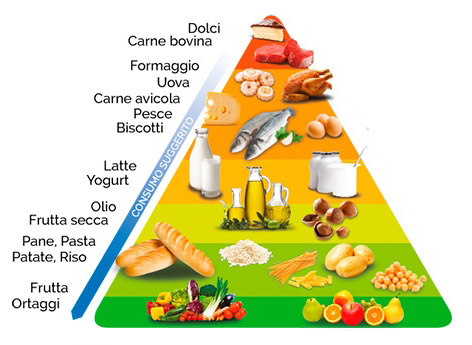
In particular, an appropriate awareness campaign for appropriate eating styles can be relevant to the health of not only the woman but also the unborn child by raising awareness of this, even after delivery. There are three actors in an advocacy campaign: allies, neutrals, and opponents
Allies, are represented by the people and organizations that support the campaign. Opinion leaders, media personalities, and group members are expected to contribute their technical expertise and material and financial resources to the advocacy campaign.
Neutrals, are represented by the people and organizations who have not yet formed an idea about the issue. Neutral parties are very important in the advocacy campaign because they can quickly become allies or opponents.
Opponents are the people or organizations that oppose an advocacy campaign.
Advocacy challenges often provoke negative reactions from people currently in power, or from people who follow other values.
Identifying opponents is as important as identifying allies. Understanding the reasoning of opponents and why they feel threatened by the proposed policy change is critical to making the advocacy campaign more effective. It is necessary to try to convince opponents to change their views, or at least neutralize their influence on the policy change you want to pursue.
How can the actions of an advocacy campaign be realized?
Public health advocacy, is effectively accomplished through media advocacy. It consists of the strategic use of new mass media to advance a public tactics initiative.
Media advocacy seeks to develop and shape new stories so that they represent support for public policy and ultimately influence those with the power to change or preserve laws, enshrine policies, and accumulate interventions that can influence the entire population. Customarily recognized as fundamental to the public health project, it is rarely taken seriously by the community itself, compared to the attention given to other disciplines.
The status of advocacy as a legitimized discipline remains neophyte: few, very few public health programs explicitly address advocacy. Comparatively, there are few manual texts and no journals devoted to this exploration.
However, like any public health initiative, effective advocacy requires careful strategic planning and an equally strategic use of modern information media to achieve.
An advocacy campaign consists of a series of targeted actions to influence politicians
and the general population in support of a cause or problem that you want to change
The steps planned for its implementation are:
- identification phase
- research phase
- planning phase
- stage of action
- evaluation phase
In an advocacy campaign there are three actors:
- Allies: they support the campaign
- Neutrals: can become allies or opponents
- Opponents: oppose the campaign
Through:
- Websites.
- Flyers.
- Petitions.
- Newsletter.
- Negotiations.
- Press conferences.
- Strikes.
- Pamphlets.
- Press releases.
A case of an organization applying this advocacy model
The American Academy of Pediatrics (AAP) is a professional organization that includes more than 50,000 pediatricians. It has a long history of dedicated, efficient and effective public health advocacy and has developed staff and systems to support this issue.
The functions of the research phase are performed by internal researchers who collect data in certain survey areas (e.g., through annual user surveys on various topics) and by members and other consultants working in committees, working groups, and other bodies.
The work of the planning also includes extensive dissemination of information to AAP members, allied organizations, the public through dedicated units within the academy and networking by national organizations, sectors, and to members with other medical societies, community groups, and other relevant organizations.
Work in the action phase is conducted by GPA staff dedicated to government affairs, who lobby national organizations.
How do I know if I can be a midwife/advocate?
The attributes needed to be able to apply patient advocacy are:
- experience;
- knowledge;
- power.
Through experience, midwives gain the knowledge that enables them to be more effective advocates within the health care team and organization.
The power to participate in and influence decision making comes from both: experience and knowledge. In a survey, the following were identified as important characteristics of the guarantor health worker for the patient: effective communication skills, theoretical-scientific knowledge, empathy, and respect for the family.
This supports previous studies that have also identified knowledge and empathy, along with assertiveness and communication skills as important attributes for advocacy to be realized. To achieve these attributes, midwives must be confident in their ability to understand the ethical dilemmas they face and must ensure that they are aware of basic ethical principles to support their contribution to discussions.
In addition to experience, knowledge and power, the specific qualities required to be “advocates” for patients are:
- Strong communication skills;
- Negotiating skills;
- Perseverance;
- Empathy;
- Awareness of the needs of others;
- Ability to read signals and evaluate timing;
- Leadership skills;
- Knowledge of basic health concepts;
- Be system thinkers and have the ability to multitask both inside and outside the workplace.
Source: ” Mediserve‘s Intrapartum Care Models,” by Vittorio Artiola, Simona Novi, Salvatore Paribello, Ferdinando Pellegrino, Giuseppina Piacente, Andrea Vettori