


of

Basedow’s disease: what is it?

morbo-basedow

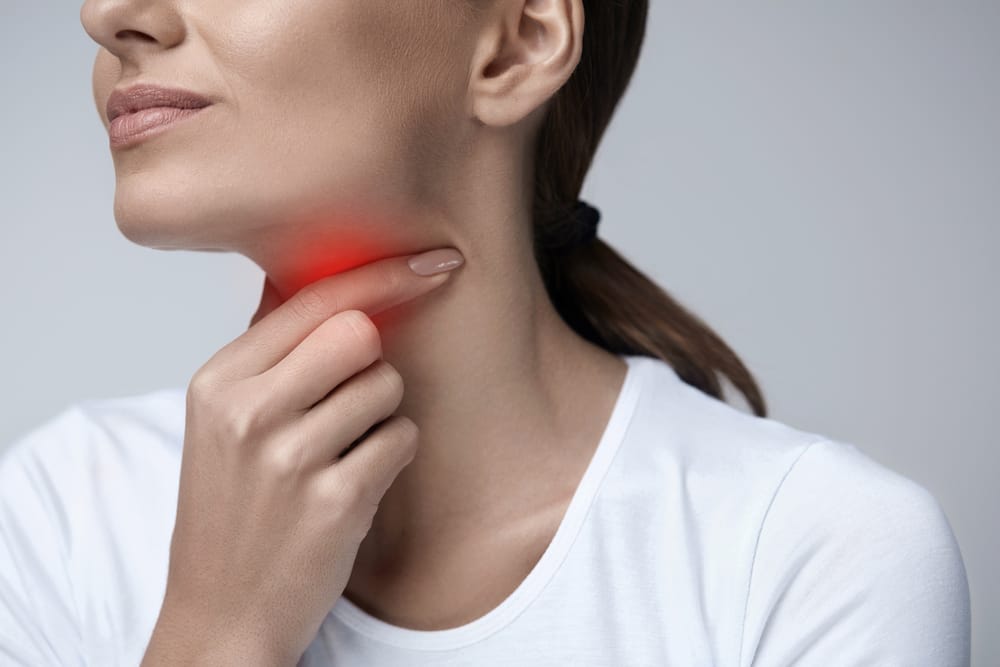
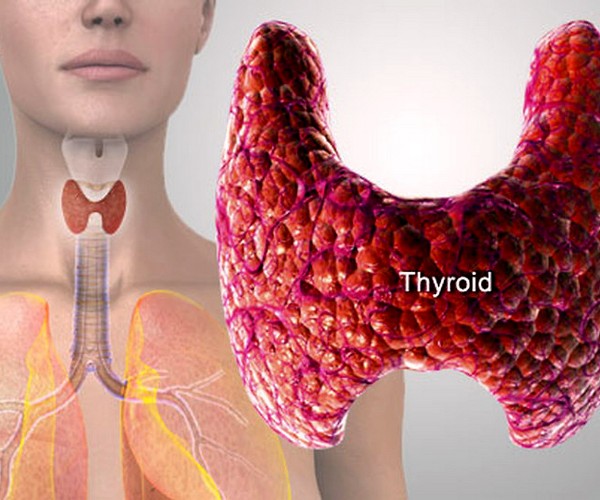
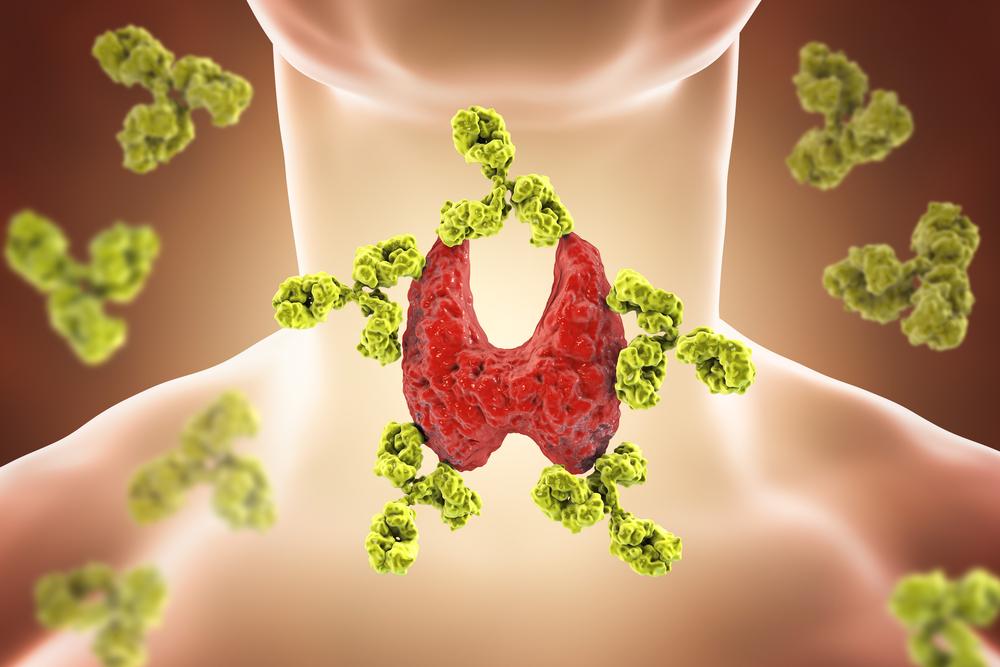
Basedow-Graves disease is an autoimmune disease, in which the immune system recognizes the thyroid gland as foreign to the body and attacks it by producing antibodies against TSH-receptor antibodies (TRAb) located on thyroid cells. The receptors are stimulated by antibodies and induce hyperproduction of thyroid hormones, T3 and T4. It has an average prevalence of between 0.5 and 2% of the population and prefers the female sex.


Read more.

FEATURED SPECIALISTS

RELATED ARTICLES

Hypermetropia: what it is and how to treat it

Hypermetropia indicates a visual defect, which causes blurred vision of near objects and sharp vision of distant objects. It is possible that the patient with hypermetropia may not realize it

Sudden pain in the child

Children who complain of pain during sleep hours resolve in a short time without the need for special treatment, but sometimes the cause may be there and must be identified quickly to prevent worsening of symptoms.

Sjogren’s syndrome

In 1933, Swedish physician Henrik Sjögren first described a group of women in whom chronic arthritis was accompanied by dry eyes and mouth, effectively discovering a condition that still bears

Complications in Lyme disease

As lyme borreliosis is a multisystem disease, which can therefore affect systems, apparatuses and organs (skin, nervous system, eyes, cardiovascular system, joints), the symptoms can be varied and refer to the different damage caused by the spread of the infection by the bacterium.

Epileptic seizure: what to do?

The seizures are self-limiting and very often do not allow a rapid intervention. It is necessary, therefore, to keep some pointers in mind: Preventing lessons that the patient might unintentionally

Anuria – Oliguria

Anuria is the failure of the kidney to produce urine. Oliguria, on the other hand, is the production of an insufficient amount of urine to maintain homeostasis. Causes may be

Heart attack (or stroke)

A heart attack occurs when the blood supply is severely reduced or interrupted. Symptoms include tightness and pain in the center of the chest, pain radiating to the shoulders, neck,

RELATED PATHOLOGIES

Hyperprolactinemia

Hyperprolactinemia corresponds to a condition determined by the excessive production of the hormone prolactin by the pituitary gland (a small neuroendocrine gland found in the center of the brain that

Pituitary tumor

Tumors of the Hypophysis (or pituitary gland) are a group of predominantly benign neoplasms affecting a small structure located in the center of the brain, posterior to the root of

Hypothyroidism

Hypothyroidism is a condition brought about by the insufficient production of thyroid hormones, tetraiodothyronine or thyroxine (T4) and tridothyronine (T3), by the thyroid gland, resulting in reduced overall metabolic efficiency

Overweight and obesity

Far from being a mere cosmetic problem, overweight and obesity are an established risk factor for the development of number of metabolic (foremost among them diabetes), acute cardiovascular (such as

Basedow’s disease

Basedow’s disease, also known as Basedow-Graves disease, is an autoimmune disease that affects the thyroid gland and results in the typical symptoms of hyperthyroidism, ophthalmopathy/exophthalmos, and dermopathy. Basedow’s disease can

Hashimoto’s thyroid

Hashimoto’s thyroiditis is an autoimmune disease that affects the thyroid gland, causing it to become chronically inflamed and gradually degenerate and lose function, resulting in the development of hypothyroidism (a

Metabolic syndrome

Metabolic syndrome is not really a disease, but a complex condition defined by the simultaneous presence of known cardiovascular risk factors such as obesity (especially of the “central” type, i.e.,

Menopause

Menopause is a physiological event that affects all women in the age range of 46 to 53 years and corresponds to the gradual loss of ovarian function and, therefore, the

Cushing’s disease

“Disease” or “Cushing’s syndrome,” sometimes referred to as “hypercortisolism,” is a condition characterized by a variable set of characteristic symptoms induced by the body’s exposure to excessive levels of glucocorticoids

Diabetic foot

Diabetic foot is a complex condition that develops as a complication of advanced uncontrolled diabetes and is the leading cause of nontraumatic amputation in the Western adult population. Very prevalent

FEATURED SPECIALISTS

prenota il tuo viedeoconsulto in convenzione

Completa il form e sarai contatto dal personale medico specializzato

your advertising

exclusively ON
MY SPECIAL DOCTOR

complete the form and you will be contacted by one of our managers