


of

Early diagnosis of breast cancer with liquid biopsy: now you can

blood samples
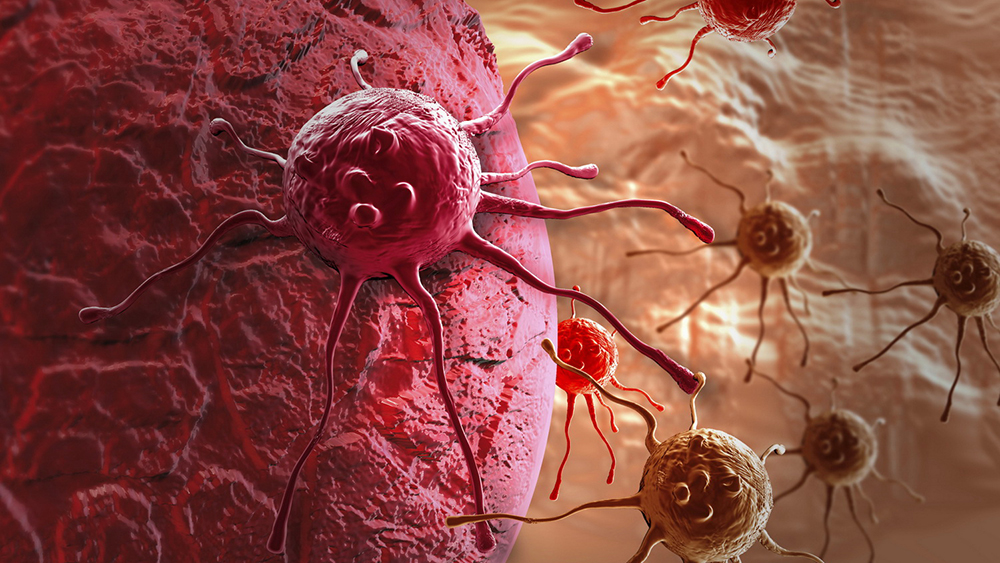
With 2.1 million new diagnoses worldwide in 2018, breast cancer is the most prevalent neoplasm in the female population globally, but also the one that can be cured best, often definitively and with nondemolishing methods, especially if it is diagnosed early, when it is still very small and not very aggressive. For this reason, regular breast self-examination and, starting at age 45-50, mammography every two years are recommended for all women to detect any minute masses that are not perceptible by touch but are already potentially risky, to be biopsied and then subjected to histological and molecular analysis to characterize them precisely and identify optimal treatment. In the near future, this already highly efficient approach may be enriched with new noninvasive diagnostic system based on the analysis of circulating tumor DNA (ctDNA), i.e., DNA fragments released into the bloodstream from aged and destroyed breast cancer cells. The ctDNA can be obtained by a simple blood draw and analyzed by an extremely precise and rapid sequencing technique called NGS (Next Generation Sequencing), aimed at detecting certain genetic mutations that are distinctively present in the DNA of breast cancer cells. The first data supporting the clinical utility of this method, termed “liquid biopsy,” come from a pilot study, coordinated by researchers at the University of Málaga (Spain), which compared the diagnostic sensitivity of the new ctDNA test before classical tissue biopsy with that of molecular analysis after classical tissue biopsy, using mutations in the PIK3CA and TP53 genes as markers. The evaluation resulted in identifying identical mutations in 8 of the 29 patients considered (27.6%): four in TP53 and five in PIK3CA. In addition, analysis with NGS on ctDNA revealed four additional genetic mutations (three in TP53 and one in PIK3CA), which had not been reported by molecular analysis of breast tissue taken by classical biopsy: which underscores the high sensitivity of “liquid biopsy” at an early stage. One of these patients had mutations in both genes under consideration. The likelihood of testing positive for markers on ctDNA examined with NGS was higher in women who were younger, had larger tumor masserella and higher imaging scores on mammography (indicative of a higher probability of actually having cancer). At the moment, the new test is still being evaluated and not available in clinical practice, but if upcoming studies confirm the performance and diagnostic sensitivity highlighted the “liquid biopsy” may soon join the classical one in the early detection of breast cancer and, perhaps, one day supplant it. In this way, women with positive mammograms, but not necessarily breast cancer, could be prevented from having their suspected breast tissue harvested for diagnostic purposes.
Source: Rodriguez BJ et al. Detection of TP53 and PIK3CA Mutations in Circulating Tumor DNA Using Next-Generation Sequencing in the Screening Process for Early Breast Cancer Diagnosis. J Clin Med 2019;8:1183-1207; doi:10.3390/jcm8081183

FEATURED SPECIALISTS

  • Profile picture of Dr. Giovanni Arrichiello
    active 5 years, 9 months ago

    Gynecologists, Basic Doctors

    • Corso Regina Margherita 260 - Torino
    phone
  • Profile picture of Dott.ssa Francesca Vittorelli
    active 5 years, 9 months ago

    Therapist, Acupuncturists, Basic Doctors

    • Corso Andrea Palladio 134 - Vicenza
    phone
  • Profile picture of Dott.ssa Irene Pistis
    active 5 years, 9 months ago

    Aesthetic Doctors, Basic Doctors, Certifying Doctor

    • Via della Reoubblica 461/3 - Vergato

    phone
  • Profile picture of Dr. Virgilio De Bono
    active 5 years, 9 months ago

    Aesthetic Doctors, Basic Doctors, Dermatologists

    • Via Ripense 4 - Roma
    phone
  • Profile picture of Dott.ssa Carmela Tizziani
    active 5 years, 9 months ago

    Coroner, Certifying Doctor, Basic Doctors

    • Via Gaetano Bruno 25 - Napoli
    phone

RELATED ARTICLES

Pituitary gland tumor: how to treat it

The hypophysis, or pituitary gland, is a gland located inside the skull at its base. Although it is very small, comparable in size to a pea, it plays a crucial role

Cancers: what are the established risk factors?

Tumors in recent years are talked about a lot: both because, Unfortunately, they are diseases that affect millions of people; both because, fortunately, biomedical research makes continuous progress in the

RELATED PATHOLOGIES

Urinary incontinence

Urinary incontinence is a condition related to muscular or neurological deficits at the level of the pelvic floor (consisting of the muscle bundles that close the base of the abdomen),

Renal calculosis

Kidney stones is a widespread disease in industrialized countries, including Italy, especially among adult men, who are affected about twice as often as women. Kidney stones are solid structures of

Salmonellosis

Salmonella infection or salmonellosis is a bacterial infection that affects theintestines. This bacterium inhabits the intestinal tract of animals andhumans and escapes to the outside with theexpulsion of feces. It

Diverticulitis

Diverticula are small pockets that can form in the lining of the digestive system. They usually occur more frequently in the lower part of thelarge intestine (colon). Diverticula are common,

Endometriosis

Endometriosis is a condition characterized by intense menstrual pain that goes beyond the common discomforts associated with flow. This is a very common condition among women of childbearing age that

Renal Colic

An attack of renal colic represents one of the most unfortunate clinical experiences because of the intense pain caused by kidney stones that may be present from the kidney to

Vaginal candidiasis

Vaginal candidiasis is one of the most common causes of genital and vulvar discomfort among women of childbearing age, especially between the ages of 20 and 40. At the origin

Peyronie’s or curved penis disease

Peyronie ‘s disease is a condition resulting from an abnormality of the penis due to fibrous scar tissue that appears on the penis changing its shape during erection, which becomes

Breast cancer

Breast cancer is the most common malignancy in the female population everywhere, albeit with different prevalence depending on geographic area, ethnicity, and lifestyle habits, and accounts for about 30% of

Varicocele

Varicocele is a venous malformation that results from loss of tone and elasticity of the veins that collect blood from the testis and carry it upward into the large venous

FEATURED SPECIALISTS

  • Profile picture of Dott. Giovanni Adamo
    active 5 years, 9 months ago

    Angiologists, Basic Doctors

    • Provincia di Ragusa - Ragusa
    phone
  • Profile picture of Dr. Lorenzo Cerreoni
    active 5 years, 9 months ago

    Aesthetic Doctors, Basic Doctors

    • Via Macero Sauli 52 - Forlì
    phone
  • Profile picture of Dott.ssa Emanuela Costantino
    active 5 years, 9 months ago

    Neurologists

    • Via Gallinara 2/B - Cagliari
    phone
  • Profile picture of Dr. Squillante Gianni Erminio
    active 5 years, 9 months ago

    Acupuncturists, Homeopathic Medicine, Basic Doctors

    • Via Monterotondo 14 - Roma
    phone
  • Profile picture of Dott. Cristiano Crisafulli
    active 5 years, 9 months ago

    Diabetologist, Basic Doctors, Internist

    • Via Vittorio Emanuele II 181 - Acireale
    phone

prenota il tuo viedeoconsulto in convenzione

Completa il form e sarai contatto dal personale medico specializzato

your advertising
exclusively ON
MY SPECIAL DOCTOR

complete the form and you will be contacted by one of our managers