



of

Can we tell if we are getting sick by reading DNA?

possiamo-capire-se-ci-stiamo-ammalando-leggendo-il-dna
Analyzing DNA for genetic traces associated with the risk of certain diseases. For some it is a good way to prevent the onset of disease, but the scientific community views the practice with skepticism.
In the United Kingdom.Matthew Hancock is the U.K. secretary of state for health. In recent days, he announced during a speech to the Royal Society, of having a high risk of developing a prostate cancer. By age 70, the probability of contracting this type of cancer would be 15%.At least according to the dna tests to which he underwent to measure the risk associated with 16 different conditions.

Decrease the risks

However, these types of DNA tests have limitations. First, they havelimited accuracy, produce results that do not change clinical and therapeutic attitudes, and

The test

The test Hancock underwent was performed by Genomics Plc. This is a so-called polygenic risk test, in which a large number of variants, found in the genome, are analyzed to develop an estimate of the risk of contracting a particular disease, with the idea that each may contribute a small part. In themselves, these types of analyses are very useful on studies of large cohorts of patients because they allow us to

The results on the individual case

At the level of the individual, however, these tests are of more limited value, Not only are they not comprehensive, but In conclusion, the clinical relevance to date of these tests remains doubtful.

To know from DNA analysis if and what we can get sick from?

Certainly predicting and controlling the future has always been one of the dreams of human beings. The discovery and studies of DNA seem to represent a kind of realization of this dream: that is, to be able to know in advance what we will fall ill with and consequently have the ability to take the necessary steps to avert this eventuality.

But is this really the case?

Scientists are very cautious about this.

For example, the polygenic risk test, by which many genome variants are analyzed to then make an estimate of the risk of contracting a specific disease, may have value but only on large numbers of patients.

Indeed, this would make it possible to identify variants linked to a given condition and thus possible metabolic pathways involved in order to prepare new drugs.

On the individual case the value of the test is limited, the clinical relevance is doubtful.

In fact, these tests involve multifactorial diseases, in which both environment and lifestyle play an important role.

As Leonardo Salvati, Director of the Graduate School of Medical Genetics at the University of Padua, points out in Wired, “These tests analyze only a part of the genetic component associated with a given condition, that is, only a tot of polymorphisms,” without taking into account individual genetic variants and their interactions.

FEATURED SPECIALISTS

  • Profile picture of Dr. Giovanni Arrichiello
    active 5 years, 6 months ago

    Gynecologists, Basic Doctors

    • Corso Regina Margherita 260 - Torino
    phone
  • Profile picture of Dott.ssa Floriana Di Martino
    active 5 years, 6 months ago

    Aesthetic Doctors, Basic Doctors

    • Piazza della Rinascita 13 - Pescara
    phone
  • Profile picture of Dr. Francesca Marceddu
    active 5 years, 6 months ago

    Anesthesiologists, Basic Doctors

    • Via del Risorgimento 49 - Pirri
    phone
  • Profile picture of Dr. Giuseppe Lepore
    active 5 years, 6 months ago

    Dermatologists, Basic Doctors, General Surgeons

    • 19 Via Manzoni Alessandro - Garbagnate Milanese
    phone
  • Profile picture of Dott. Sandro Morganti
    active 5 years, 6 months ago

    Orthopedists, Basic Doctors, Osteopaths

    • Via Foligno 6 - Roma
    phone

RELATED ARTICLES

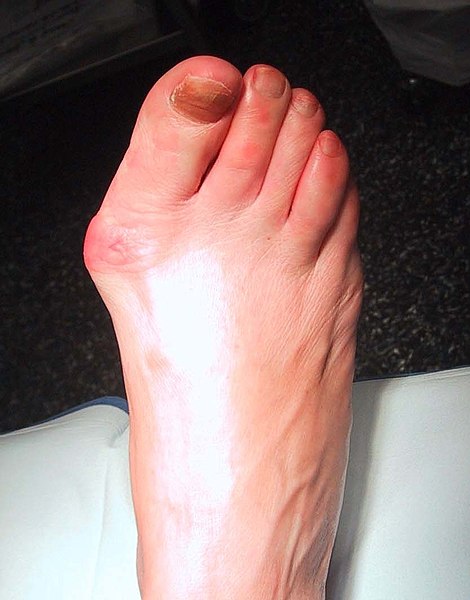
Hallux valgus: how to treat it

Hallux valgus is a deformity of the first toe, which appears deviated laterally toward the other toes, with simultaneous medial protrusion of the first metatarsal bone. This bony deformity is

The family and the patient with bipolar disorder

Bipolar disorder not only disrupts the patient's life but also makes the lives of those around him difficult and sometimes painful. People affected by this disorder often have difficulty acknowledging their mental state to themselves.

Furunculosis – What is it?

Furunculosis is a deep infection of hair follicles generally caused by the bacterium Staphylococcus aureus and mainly affecting the face. Furunculosis is a deep infection of hair follicles generally caused by the
RELATED PATHOLOGIES

Restless leg syndrome

Restless legs syndrome is a chronic disorder characterized by the onset of a feeling of general leg discomfort, which occurs when the legs are kept still even for short periods

Kidney cancer

As with all cancers, the causes of adenocarcinoma and renal sarcomas lie in a series of genetic mutations that allow a group of cells to acquire new characteristics and begin

Epithelioma

Epithelioma is a tumor due to abnormal growth of epithelium, which corresponds to the tissue that lines the surface of all hollow structures and organs in the human body (from

Fainting

Fainting is a simple term in common use that is used to describe a loss of consciousness that can occur at any time in life for countless reasons, more or

Sleep and menopause

Sleep disorders are one of the health problems most often reported by women approaching menopause and in the period after (climacteric). The need for sleep naturally tends to decrease with

Rickets

Rickets is a condition characterized by a severe impairment of bone mineralization, resulting in fragility and the onset of skeletal deformities at multiple levels, which mainly affects infants and children

Degenerative maculopathy

Degenerative maculopathy is an irreversible disease that affects the macula, the central part of the retina. The result is a progressive loss of visual ability. There are two distinct forms

Bronchial asthma

Bronchial asthma is a chronic respiratory disease brought about by persistent inflammation of the airways, particularly the bronchi, which generates hypersensitivity to a variety of stimuli that, when present, result

Angioma

Angiomas, also called “hemangiomas,” are benign vascular malformations involving arterial or venous capillaries and can affect anywhere on the body, but they tend to appear most often on the skin

Renal calculosis

Kidney stones is a widespread disease in industrialized countries, including Italy, especially among adult men, who are affected about twice as often as women. Kidney stones are solid structures of

FEATURED SPECIALISTS

  • Profile picture of Dr. Roberto Zaffaroni
    active 5 years, 6 months ago

    Basic Doctors, Therapist

    • Via San Francesco D' Assisi 5 - Varese
    phone
  • Profile picture of Dr. Giuseppe Panico
    active 5 years, 6 months ago

    Dermatologists, Basic Doctors

    • Viale Prassilla 41 - Roma
    phone
  • Profile picture of Dott.ssa Irene Pistis
    active 5 years, 6 months ago

    Aesthetic Doctors, Basic Doctors, Certifying Doctor

    • Via della Reoubblica 461/3 - Vergato
    phone
  • Profile picture of Dott.ssa Federica Filigheddu
    active 5 years, 6 months ago

    Basic Doctors

    phone
  • Profile picture of Dr. Lorenzo Cerreoni
    active 5 years, 6 months ago

    Aesthetic Doctors, Basic Doctors

    • Via Macero Sauli 52 - Forlì
    phone

prenota il tuo viedeoconsulto in convenzione

Completa il form e sarai contatto dal personale medico specializzato

your advertising
exclusively ON
MY SPECIAL DOCTOR

complete the form and you will be contacted by one of our managers