

of

Brushing your teeth often is good for your heart

immagine-1

It allows you to maintain a bright smile and fresher, more pleasant breath, with definite benefits in interpersonal and work relationships and positive effects on self-esteem. Reduces the risk of having to endure significant suffering due to gum disease and dental damage and the dental care required to remove it. It saves not insignificant amounts of money, which can be better used for enjoyable activities, travel, necessary purchases or to take courses that increase knowledge and skills. Alongside these countless and diverse benefits, careful and frequent daily oral hygiene now seems to be able to offer additional and particularly relevant ones on the cardiac health front.

According to the results of a recent study published in the European Journal of preventive Medicine, one of the scientific journals of the European Society of Cardiology (ESC), brushing teeth well several times a day would also reduce the risk of developing two of the most prevalent heart diseases in the population globally: atrial fibrillation (the most frequently encountered cardiac arrhythmia, which can occur as early as 35-40 years of age, either in isolation or in association with other cardiovascular diseases) and heart failure (a disease more typical of advanced age, in which the heart gradually loses its ability to pump blood into the blood vessels, leading to a progressive deterioration in overall physical condition and ability to perform daily activities).

Researchers at Ewha Womans University in Seoul, Korea, arrived at this conclusion by monitoring for more than a decade more than 161,000 people included in the database of the Korean National Health Insurance System, one of the insurance systems that provide health coverage to Korean citizens. The people considered in the study, were aged 40 to 79 years and were free of atrial fibrillation and heart failure at the time of enrollment in 2003-2004. Each participant underwent a thorough preliminary clinical evaluation, with information collected on weight, height, presence/absence of disease, lifestyle, oral health status, and oral hygiene behavior.

During the observation period, 4,911 participants (accounting for 3.0% of the total) developed atrial fibrillation, while 7,971 (accounting for 4.9%) were diagnosed with heart failure. Both diseases are known to be favored by a variety of risk factors, such as age, sex, exercise level, body weight, alcohol consumption, socioeconomic status, and the presence of other diseases that may directly or indirectly interfere with heart function. By purifying the analysis of all these potentially confounding factors, the researchers found that the level of oral hygiene maintained over the 10.5 years of follow-up could have a significant independent impact on cardiac health. Specifically, it was observed that people who brushed their teeth at least three times a day (i.e., indicatively, after each of their main meals) had a 10% lower risk of developing atrial fibrillation and a 12% lower risk of developing heart failure.

Since this is an observational study, the data obtained are insufficient to establish a definite causal link between oral hygiene and propensity to be affected by these two heart diseases, let alone to trace the mechanisms underlying the protective effect of more assiduous tooth brushing. However, based on information from previous studies, it can be hypothesized that more frequent and thorough brushing can remove more bacteria from the gingival sulcus (plaque) by preventing/reducing their passage into the bloodstream. This would maintain a lower level of inflammation in the body in general, with positive repercussions for the heart and the entire cardiovascular system.

At the moment, it cannot be stated with certainty that brushing teeth at least three times a day actually reduces the risk of atrial fibrillation and heart failure, but pending new studies it may be advantageous in any case to take more careful care of oral hygiene, in view of the countless benefits of maintaining better oral health anyway.

Sources

  • Chang Y, Woo HG, Park J, et al. Improved oral hygiene care is associated with decreased risk of occurrence for atrial fibrillation and heart failure: A nationwide population-based cohort study. Eur J Prev Cardiol. 2019.
  • Meyre P, Conen D. Does tooth brushing protect from atrial fibrillation and heart failure? Eur J Prev Cardiol. 2019.

FEATURED SPECIALISTS

  • Profile picture of Dott. Cristiano Crisafulli
    active 5 years, 10 months ago

    Diabetologist, Basic Doctors, Internist

    • Via Vittorio Emanuele II 181 - Acireale
    phone
  • Profile picture of Dott. Sandro Morganti
    active 5 years, 10 months ago

    Orthopedists, Basic Doctors, Osteopaths

    • Via Foligno 6 - Roma
    phone
  • Profile picture of Dott.ssa Irene Pistis
    active 5 years, 10 months ago

    Aesthetic Doctors, Basic Doctors, Certifying Doctor

    • Via della Reoubblica 461/3 - Vergato
    phone
  • Profile picture of Dott.ssa Maria Grazia Caruana
    active 5 years, 10 months ago

    Aesthetic Doctors, Basic Doctors

    • Viale Prassilla 41 - Roma
    phone
  • Profile picture of Dr. Squillante Gianni Erminio
    active 5 years, 10 months ago

    Acupuncturists, Homeopathic Medicine, Basic Doctors

    • Via Monterotondo 14 - Roma
    phone

RELATED ARTICLES

Drug excipients: inactive, but not for all

The excipients, that is, “biologically inert” substances added to a drug to improve their taste, color, absorption efficiency, mode and time of action in the body, are generally considered safe

At birth we already have a few billion years

In this course we will analyze, from an evolutionary perspective, some important characteristics of Homo Sapiens Sapiens infants, the result of millions of years of evolution, which affect adult development and psychic life.

Panic attacks in adolescence

Panic attacks are one of the typical symptoms of adolescence. Anxiety disorders and panic attacks in fact represent one of the prevalent reasons why psychological counseling is sought in this age group.

Shoulder arthrosis: how to treat it

Osteoarthritis represents the degenerative disease of joints. This occurs when cartilage, which normally acts as a protective covering for bones allowing smooth and pain-free movement, goes through degeneration. Without cartilage

Thyroid slowed down?

The thyroid is a small gland that is responsible for regulating metabolism, that is, the rate at which food intake is converted into energy. If thyroid activity slows down too

Working professions in mitral valve disease

It is well known that risk factors for heart disease include habits such as excessive alcohol use, such as smoking, a high-protein and high-fat diet, and also genetic factors, while less consideration is often given to factors of occupational origin.

RELATED PATHOLOGIES

Peripheral arteriopathy obliterans

Peripheral arteriopathy obliterans is a vascular disease that affects the arteries, especially those in the legs, preventing the muscles and tissues from receiving adequate blood supply, resulting in symptoms of

Aortic valvulopathy

When the aortic valve does not properly perform its function of pumping blood into the heart, an aortic disease condition occurs that also involves the left ventricle. Aortic valve disease

Coronaropathy

The term coronary artery disease refers to chronic “distress” of the coronary arteries, the arteries that supply blood to the heart muscle, in most cases brought about by atherosclerotic pathology

Obstructive sleep apnea

Repetitive episodes of upper airway obstruction may occur during sleep, often accompanied by reduced oxygen saturation. Such episodes are accompanied in almost all cases by snoring. Apneas often end with

Carotid stenosis

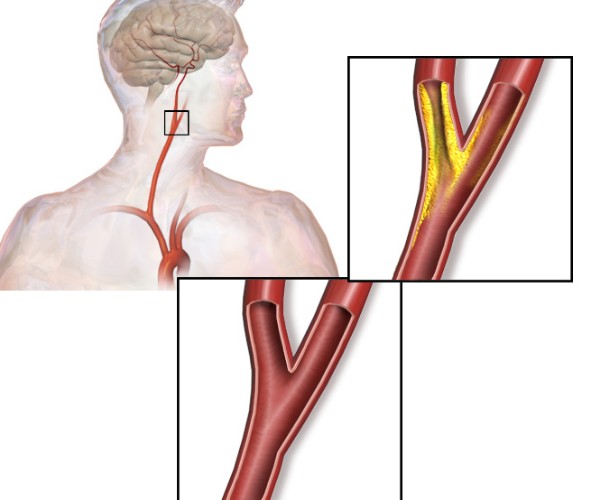
Carotid artery stenosis corresponds to a narrowing of the caliber of the carotid arteries, which are the main blood vessels supplying the brain with oxygen- and nutrient-rich blood (particularly glucose),

Blow to the heart

A “heart murmur” is not in itself a pathology , but merely a signal that the blood inside the heart is flowing too fast or in a “disordered” manner, producing

Cellulite

Cellulite is an inflammatory-based alteration of the fat-rich subcutaneous tissue(panniculus adiposus), triggered by fluid stagnation due to poor venous and lymphatic circulation (lymph is a fluid that flows in channels

Mitral valve repair

Repair of an insufficient/deteriorated mitral valve can be done: Removing the malfunctioning segments of the valve leaflets; implanting “synthetic cords” (which replace the broken or “stretched” natural ones of the

Venous insufficiency

Venous insufficiency and associated vascular disorders, such as varicose veins and telangiectasias (superficial capillaries), mainly affect the venous vessels of the legs and arms and are mainly related to the

Atrial fibrillation

Atrial fibrillation is the most common heart rhythm disorder in the Western world. In the United States it affects about three million people; in Italy, an estimated 600-700 thousand people

FEATURED SPECIALISTS

  • Profile picture of Dott. Domenico Napolitano
    active 5 years, 10 months ago

    Gynecologists, Basic Doctors, Aesthetic Doctors

    • Viale Orazio Flacco 5 - Bari
    phone
  • Profile picture of Dr. Giuseppe Lepore
    active 5 years, 10 months ago

    Dermatologists, Basic Doctors, General Surgeons

    • 19 Via Manzoni Alessandro - Garbagnate Milanese
    phone
  • Profile picture of Dott. Cristiano Crisafulli
    active 5 years, 10 months ago

    Diabetologist, Basic Doctors, Internist

    • Via Vittorio Emanuele II 181 - Acireale
    phone
  • Profile picture of Dr. Francesca Marceddu
    active 5 years, 10 months ago

    Anesthesiologists, Basic Doctors

    • Via del Risorgimento 49 - Pirri
    phone
  • Profile picture of Dr. Virgilio De Bono
    active 5 years, 10 months ago

    Aesthetic Doctors, Basic Doctors, Dermatologists

    • Via Ripense 4 - Roma
    phone

prenota il tuo viedeoconsulto in convenzione

Completa il form e sarai contatto dal personale medico specializzato

your advertising
exclusively ON
MY SPECIAL DOCTOR

complete the form and you will be contacted by one of our managers