


of

CT Computed Axial Tomography

tac

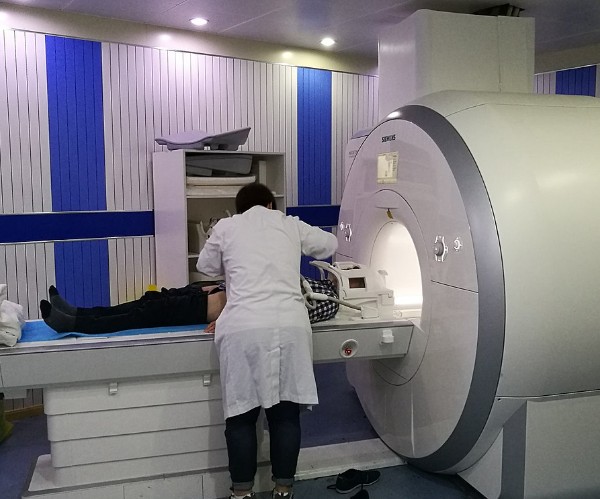
Computed tomography, abbreviated as CT, still often commonly referred to as CAT (computerized axial tomography) despite the evolution of the method, is an imaging investigation that provides very detailed three-dimensional structural information of the internal organs of the human body, making use of ionizing radiation (X-rays).

Description

To perform the CT scan, it is, first of all, necessary to remove all metal or other objects (earrings, rings, bracelets, chains, glasses, etc.), undress and put on the gown provided by the health care personnel.

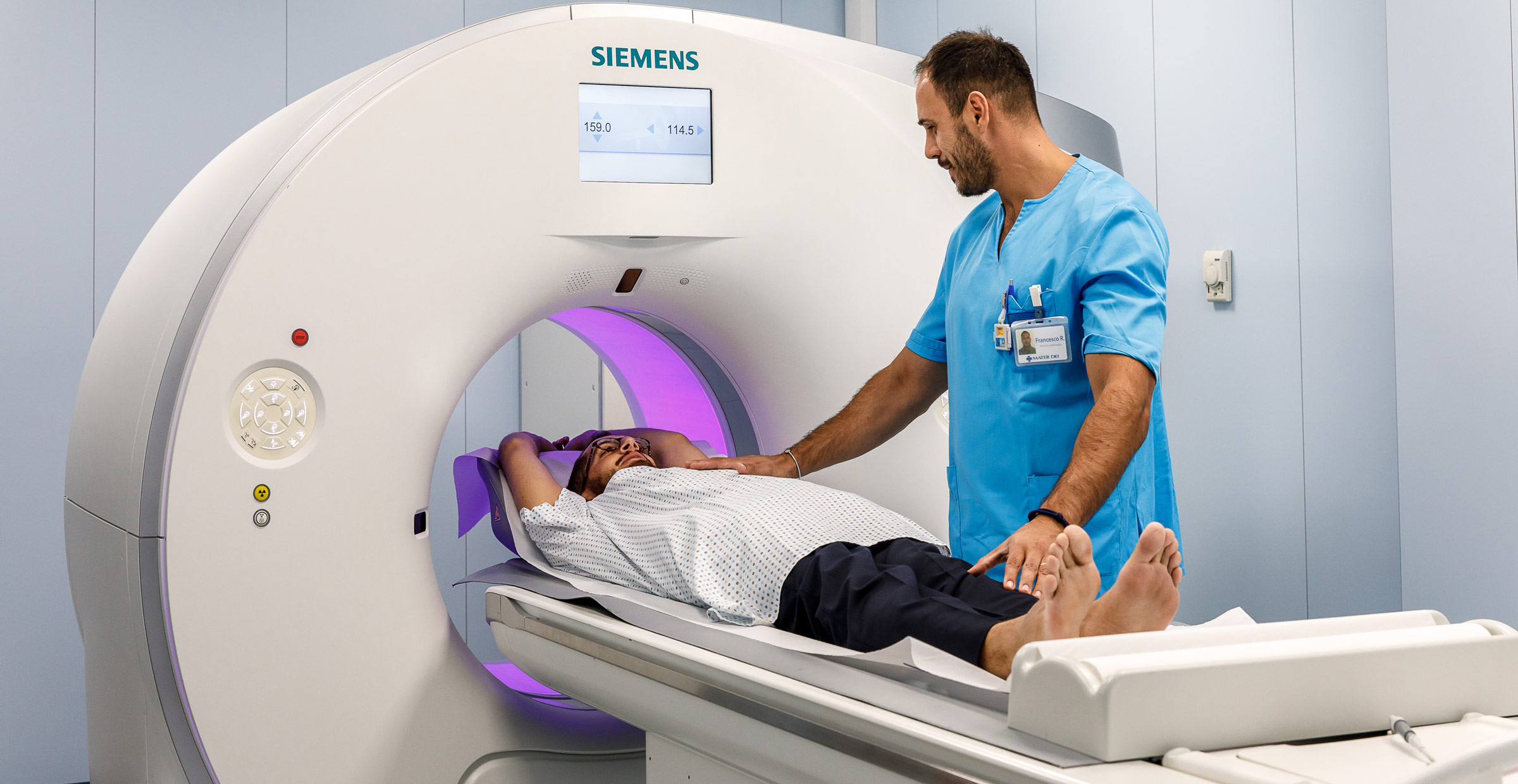
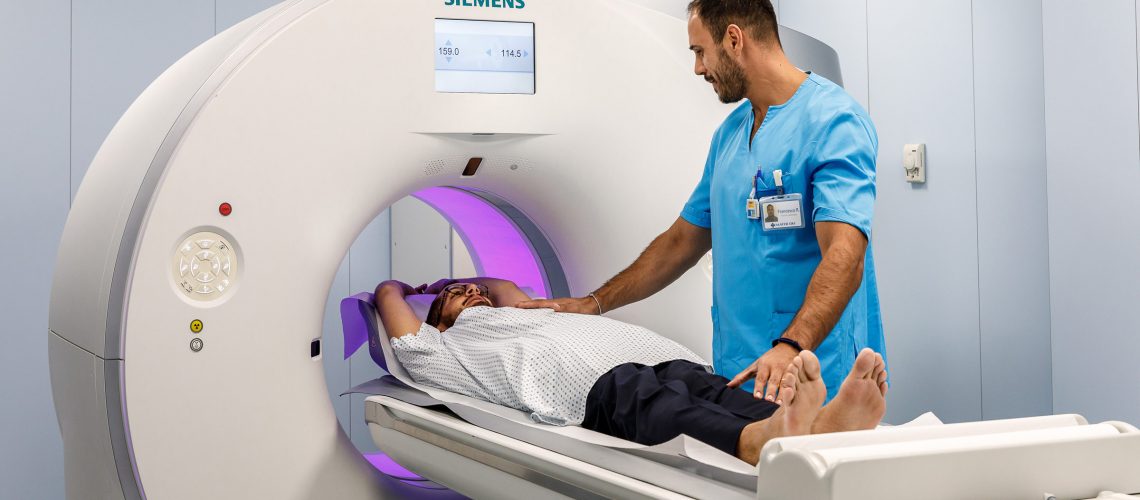
Then, one should lie down on the couch of the CT apparatus and get into the position indicated by the doctors, which should be held stably throughout the evaluation, following precisely the doctors’ requests regarding breathing. When the correct position has been assumed, the crib begins to slide, going through a structure similar to a large doughnut with a hole in it, stopping in places at the areas to be analyzed.

At this stage, the CT scan circle administers ionizing radiation while special sensors acquire signals from the body tissues examined; in doing so, the circle rotates on itself to acquire information in all directions in space.

The collected signals are transduced into electrical pulses and sent to a computer that integrates and processes them, turning them into three-dimensional images, displayed on the monitor, which can be further processed to optimize their resolution and photographed to fix the most interesting aspects for clinical purposes.

The duration of the CT scan varies according to the extent and complexity of the area of the body to be examined (encephalon, chest, abdomen, limbs, etc.), as well as the type of instrument used (newer or older) and the patient’s ability to maintain the required position. On average, the total duration of the evaluation is about 30 minutes. The examination is completely painless.

In some cases, to improve the diagnostic ability of the CT scan, a contrast agent is to be used, which, depending on the case and the purpose of the investigation, will have to be taken by mouth (liquid) or injected into a vein or inserted into the rectum, a few minutes before lying down on the instrument bed.

When needed

Now widely used in clinical practice, CT scanning is considered a Level 2 evaluation, to be used when other simpler, cheaper, and harmless techniques do not allow to specify the diagnosis with a sufficient degree of accuracy and in planning interventional procedures.

One of the main reasons for limiting the use of CT scans relates to the fact that the proportion of ionizing radiation administered during the examination, while not harmful when considering a single evaluation, is not negligible (amounting to about 30 times that used in performing X-rays), and the accumulation of the effects of X-rays administered in numerous subsequent CT scans, even years apart, could damage the body’s tissues and promote the development of fibrosis or tumors.

The main indications for performing CT include:

  • Diagnosis of muscle and bone diseases, such as sarcomas, bone tumors, and complex fractures;
  • Clarification of the location (and relationship to neighboring tissues/organs) of a tumor, site of infection, or blood clot (thrombus);
  • Planning for an invasive procedure such as a delicate surgery or biopsy;
  • Accurate identification of the area where a tumor is present to be treated with radiation therapy;
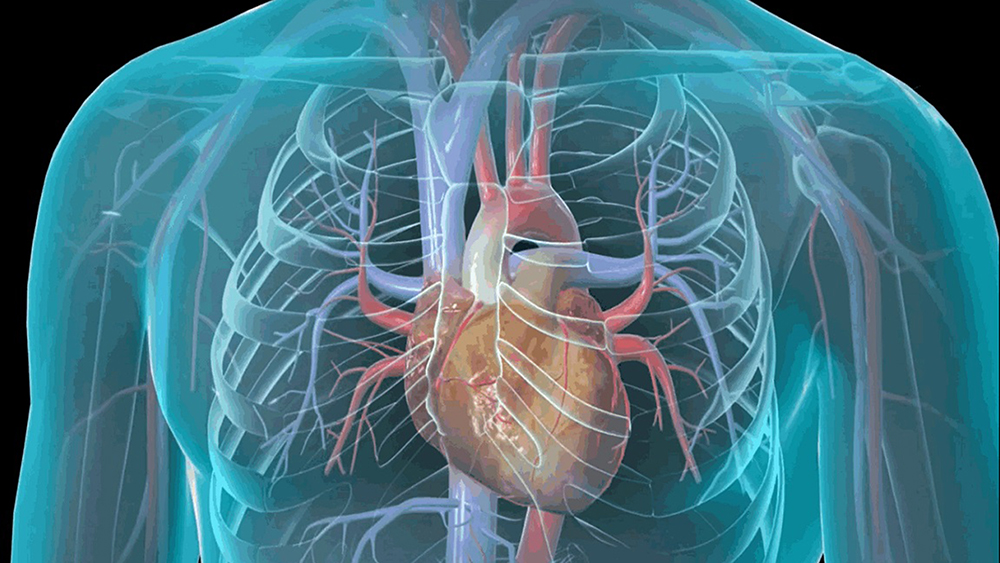
  • Detection and monitoring of tumors, heart disease (coronary angiography with CT), lung nodules, and liver masses;
  • Evaluation of the effectiveness of specific therapies, particularly cancer therapies;
  • Accurate detection and localization of injuries and bleeding to internal organs.

Special Warnings

By itself, CT scan has no particular contraindications. However, in view of the use of ionizing radiation, it is important for women of childbearing age to be certain that they are not pregnant at the time the examination is performed. Conversely, although the radiation dose used is not likely to harm the fetus, if possible, it is preferable to postpone the evaluation or opt for an alternative diagnostic method (ultrasound or MRI).

The contrast medium used for CT scanning is generally harmless, but some people may develop hypersensitivity reactions (with onset of itching and skin rash) or true allergies: if you have had such experiences in previous examinations with contrast medium (even other than CT) or you are intolerant or allergic to particular drugs, it is important to inform your health care provider already while scheduling your CT appointment.

FEATURED SPECIALISTS

  • Profile picture of Dr. Antonio Varriale
    active 5 years, 6 months ago

    Aesthetic Doctors, Dentists, Basic Doctors

    • Via Grotta dell Olmo 20 - Giugliano in Campania
    phone
  • Profile picture of Dr. Lorenzo Cerreoni
    active 5 years, 6 months ago

    Aesthetic Doctors, Basic Doctors

    • Via Macero Sauli 52 - Forlì
    phone
  • Profile picture of Dr. Francesca Marceddu
    active 5 years, 6 months ago

    Anesthesiologists, Basic Doctors

    • Via del Risorgimento 49 - Pirri
    phone
  • Profile picture of Dott. Flavio Della Croce
    active 5 years, 6 months ago

    Psychotherapists, Basic Doctors

    • Via Sacconi 1 - Borgonovo Val Tidone
    phone
  • Profile picture of Dott.ssa Maria Grazia Caruana
    active 5 years, 6 months ago

    Aesthetic Doctors, Basic Doctors

    • Viale Prassilla 41 - Roma
    phone

RELATED ARTICLES

Too much Caffeine?

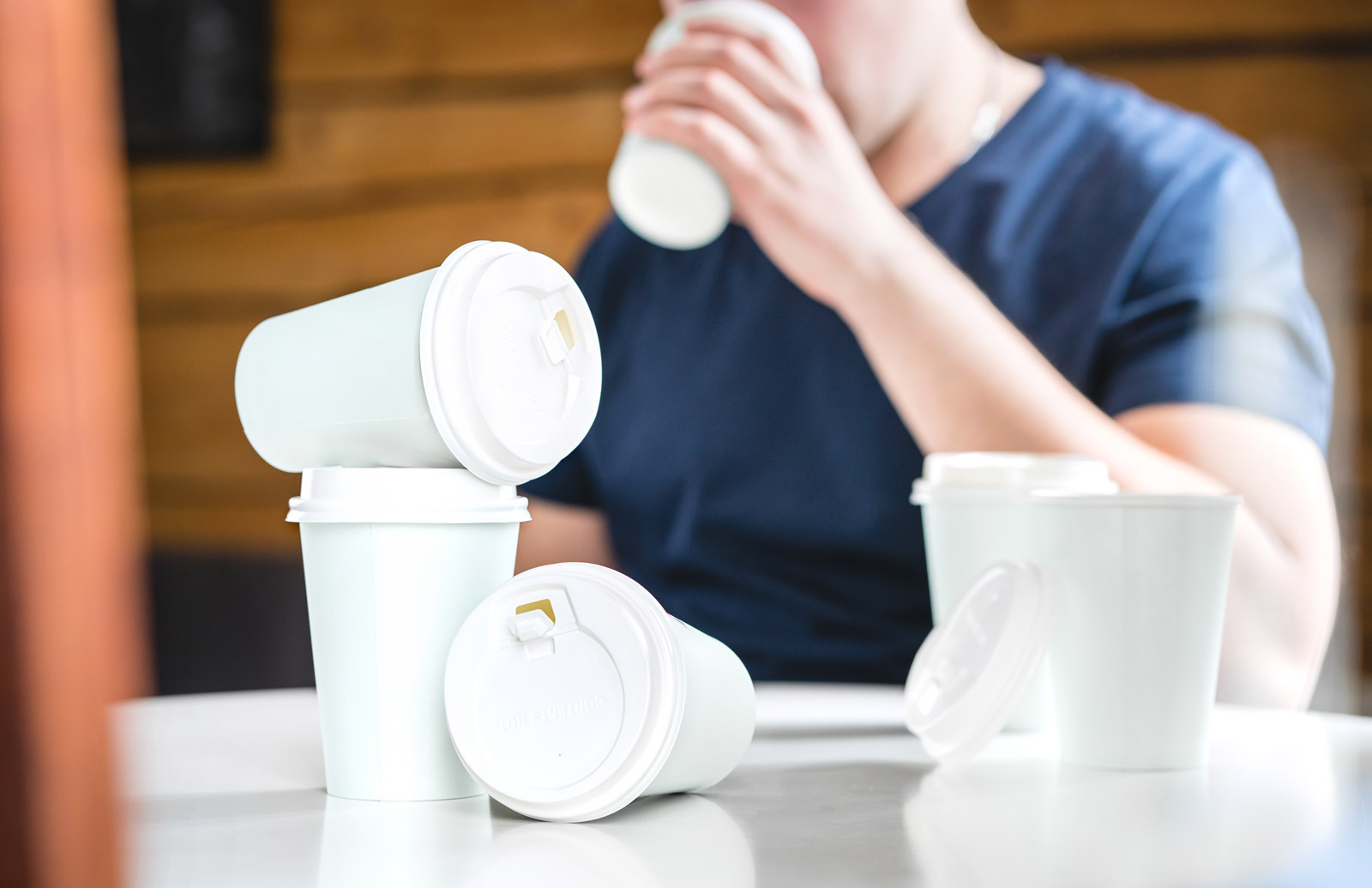
Taken in small doses it improves concentration, while if taken in excessive doses it causes heart rate, raises blood pressure levels and induces a state of nervousness.

Aortic valve repair

When aortic valvulopathy presents significant quality-of-life problems for the patient but also obvious risks of serious consequences, cardiac surgery may be necessary.

Why do I get cramps when I run?

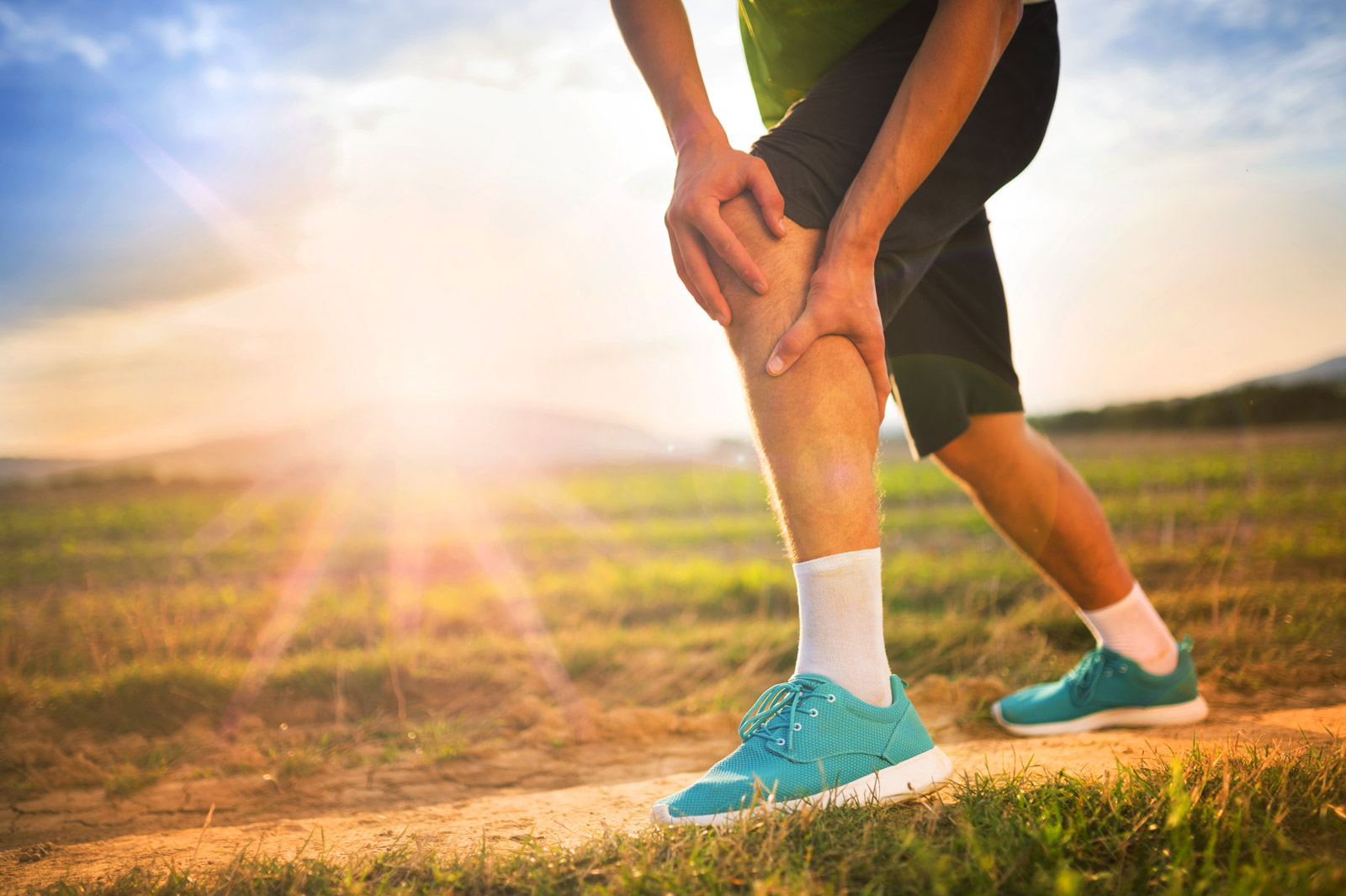
A muscle cramp can come suddenly , such as during a run , and it does not announce itself with any kind of sign. At most you may realize it is coming very late , when already the muscle is contracting or overlapping.

Aortic valve replacement

When the condition of the aortic valve is severe and the insufficiency is exposing the patient to heart failure, as well as the possibility of developing other, serious, life-threatening conditions, aortic valve replacement is the way to go.

Food, sports, sex: easy summer excesses

There are many pleasant and satisfying experiences in the summer in which mood and emotions are at their peak, conditions that could also sometimes cause misjudgment of some hidden dangers in a crescendo of positive and exhilarating experiences. So what ? Spoil the party with negative thoughts and fears ?

Ultrasound

Ultrasound is a diagnostic imaging technique based on the use of ultrasound that is quick and easy to perform, harmless, painless, and low-cost, and because of these favorable characteristics it

Working professions in mitral valve disease

It is well known that risk factors for heart disease include habits such as excessive alcohol use, such as smoking, a high-protein and high-fat diet, and also genetic factors, while less consideration is often given to factors of occupational origin.

RELATED PATHOLOGIES

Mitral valve repair

Repair of an insufficient/deteriorated mitral valve can be done: Removing the malfunctioning segments of the valve leaflets; implanting “synthetic cords” (which replace the broken or “stretched” natural ones of the

Heart failure (acute)

Acute Heart Failure (AHF) is a potentially life-threatening clinical condition that can result from the worsening of an already diagnosed chronic heart failure (heart failure) or represent its onset event.

Cardiac arrhythmias

The group of cardiac arrhythmias includes all conditions characterized by an alteration in the rhythm of contraction of the heart, either in excess or in defect or associated with irregularities

Jugular stenosis

Jugular stenosis corresponds to a narrowing of the lumen of the jugular veins, which are the main blood vessels that collect oxygen-poor blood from the brain and return it to

Venous insufficiency

Venous insufficiency and associated vascular disorders, such as varicose veins and telangiectasias (superficial capillaries), mainly affect the venous vessels of the legs and arms and are mainly related to the

Peripheral arteriopathy obliterans

Peripheral arteriopathy obliterans is a vascular disease that affects the arteries, especially those in the legs, preventing the muscles and tissues from receiving adequate blood supply, resulting in symptoms of

Diseases of the heart valves

Heart valve diseases comprise a large group of structural alterations and dysfunctions, congenital or more often acquired, that prevent the valves that separate the different chambers of the heart (atria

Coronaropathy

The term coronary artery disease refers to chronic “distress” of the coronary arteries, the arteries that supply blood to the heart muscle, in most cases brought about by atherosclerotic pathology

Obstructive sleep apnea

Repetitive episodes of upper airway obstruction may occur during sleep, often accompanied by reduced oxygen saturation. Such episodes are accompanied in almost all cases by snoring. Apneas often end with

Aortic aneurysm

An aortic aneurysm refers to permanent dilatation of a well-defined segment of the aorta, the largest artery in the body that receives blood directly from the left ventricle and distributes

FEATURED SPECIALISTS

  • Profile picture of Dr. Giuseppe Panico
    active 5 years, 6 months ago

    Dermatologists, Basic Doctors

    • Viale Prassilla 41 - Roma
    phone
  • Profile picture of Dott.ssa Ilaria Berto
    active 5 years, 6 months ago

    Basic Doctors, Acupuncturists, Aesthetic Doctors

    • Via Antonio Corradini 1 - Este
    phone
  • Profile picture of Dr. Roberto Zaffaroni
    active 5 years, 6 months ago

    Basic Doctors, Therapist

    • Via San Francesco D' Assisi 5 - Varese
    phone
  • Profile picture of Dott.ssa Floriana Di Martino
    active 5 years, 6 months ago

    Aesthetic Doctors, Basic Doctors

    • Piazza della Rinascita 13 - Pescara
    phone
  • Profile picture of Dr. Tiziana Volpe
    active 5 years, 6 months ago

    Gynecologists, Basic Doctors, Professional Counselor

    • Piazzale Jonio 50 - Roma
    phone

prenota il tuo viedeoconsulto in convenzione

Completa il form e sarai contatto dal personale medico specializzato

your advertising
exclusively ON
MY SPECIAL DOCTOR

complete the form and you will be contacted by one of our managers