


of

Adolescents and mental distress: how it has changed in 30 years

immagine-3

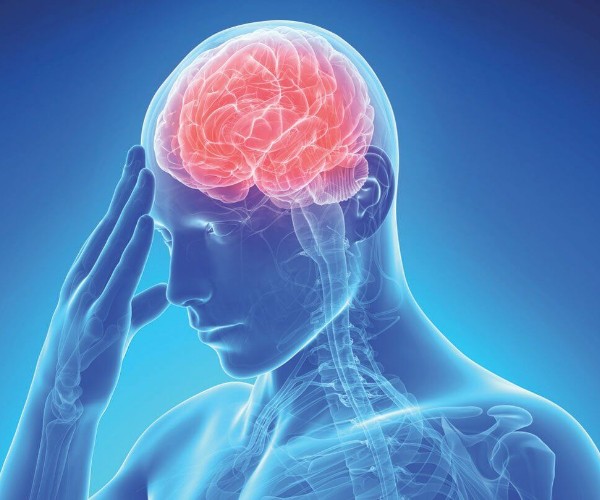
Adolescent mental health is causing no small amount of concern globally. Studies conducted from the 1980s to the present indicate a gradual increase in the prevalence of psychiatric distress, which can undermine peaceful psychoemotional growth and the building of positive interpersonal relationships: two fundamental elements, at this delicate stage of life, for developing a “solid” personality, achieving a good inner balance and maintaining a satisfactory quality of life in adulthood.

In particular, becoming increasingly common seem to be so-called “internalization” or “introjection” symptoms, i.e., feelings and behaviors indicative of inner or internalized suffering that is not actively or immediately expressed outwardly. For example, the following are symptoms of internalization: avoiding interaction with others; speaking little and shutting oneself in; feeling lonely and unloved/considered; being nervous and irritable; worrying excessively; suffering from discomfort not referable to an organic cause (such as headache, stomach ache, etc.); not being able to concentrate; feeling sad, low energy or down; lacking interest in most things/situations; sleeping or eating more or less than usual. Some, perhaps, will recognize in this list the typical picture of depression and anxiety. And he is not wrong, because the onset of these manifestations, in many cases, is a prelude to the very clinical diagnosis of these psychiatric disorders, which are also increasingly found among adults.

To delve deeper into the phenomenon, specify its characteristics and hypothesize its causes, a group of Swedish researchers from Umeå and Stockholm Universities analyzed how the incidence of psychiatric symptoms among adolescents has changed over 30 years by comparing two cohorts of students, residing in two medium-sized industrial towns in northern Sweden, who were attending the last year of compulsory school in 1981 and 2014. Each cohort, consisting of 1,083 and 682 boys and girls, respectively, was asked to answer identical questionnaires based on 4 scales assessing depressive, anxiety, and functional-somatic symptoms (i.e., related to physical complaints of possible psychic origin).

The comparison showed that from 1981 to 2014, the prevalence of internalizing disorders actually increased significantly in adolescents of both sexes, but particularly markedly among girls. Conversely, so-called “conduct disorders” (i.e., aggressive and violent attitudes, bullying, risky behaviors, etc.) have decreased among boys, while they have increased among girls, equalizing the prevalence between the two sexes and leaving the overall prevalence figure almost stable compared to 30 years earlier. The researchers also found that there was no obvious correlation between sociodemographic factors (family income, living environment, etc.) and adolescents’ psychiatric symptoms, with the only exception being a higher prevalence of conduct disorders among 1981 teens who had unemployed parents.

The underlying causes of the increase in depression and anxiety symptoms among teens remain to be determined, but the study authors believe that some profound socioeconomic changes since the 1990s may have played a role, even when they did not directly affect adolescents. The main ones include: the extremes of the liberalist economic model and its repercussions on the labor market (flexibility, job instability, driven competition, increased demands, reduced rewards, etc.); the deterioration of social relations and sense of community; family economic difficulties and uncertainty about the future resulting from the crises of recent years; technological evolution and the “virtualization” of interpersonal relationships through social media, resulting in isolation, distortion of perception of reality, and online frustration/harassment; and concern about one’s own future and that of the planet, which are increasingly difficult to predict and less and less rosy to assume.

According to the authors, in order to curb the phenomenon and ensure adolescents and adults greater psychoemotional well-being, it is necessary not only to recognize and address the symptoms of depression and anxiety on the level of “medical” prevention, but also to consider all the mentioned contextual aspects and try to modify them in a more “psychologically acceptable” sense. Certainly not an easy undertaking and one that does not immediately translate into practice.

Source: Blom H et al. Increase of internalized mental health symptoms among adolescents during the last three decades. Journal of Public Health 2019;29(5)925-931(doi.org/10.1093/eurpub/ckz028)

Photo by Kyle Broad on Unsplash

FEATURED SPECIALISTS

  • Profile picture of Dott.ssa OLGA PETROVSKAIA
    active 5 years, 10 months ago

    Pain therapists, Basic Doctors, Therapist

    • Via Giulio Romano 3 - Valle Martella
    phone
  • Profile picture of Dott. Flavio Della Croce
    active 5 years, 10 months ago

    Psychotherapists, Basic Doctors

    • Via Sacconi 1 - Borgonovo Val Tidone
    phone
  • Profile picture of Dr. Sergio Ettore Salteri
    active 5 years, 10 months ago

    Basic Doctors, Chiropractors, Posturologists

    • Via Vial di Romans 8 - Cordenons
    phone
  • Profile picture of Dr. Fabio Fabi
    active 5 years, 10 months ago

    Sports Doctors, Internist, Basic Doctors

    • Via Sarsina 147 - Roma
    phone
  • Profile picture of Dr. Domenico D'Angelo
    active 5 years, 10 months ago

    Otolaryngologists, Basic Doctors, Competent Doctor

    • Via Pola 5 - San Prisco
    phone

RELATED ARTICLES

Perhaps a little dehydrated

When one is thirsty and feels the need to drink, it is already a sign of dehydration. Fatigue may also depend on a dehydration condition. The body has a constant

Home Remedies: What Works?

Treating Ailments with Home Remedies It’s best not to fully rely on what you’ve heard about curative remedies; it’s always better to discuss them with your primary care physician before

Microplastics in water: a lurking danger

Seas and oceans invaded by bottles, saucers, glasses, straws and shopping bags. Fish and birds killed by excess plastic ingested or filtered through gills. Idyllic beaches awash in garbage that

RELATED PATHOLOGIES

Deep vein thrombosis (DVT)

Deep vein thrombosis (DVT) occurs when a clot (thrombus) forms within a vein and completely or partially occludes it, blocking or restricting blood flow in that vessel. In principle, any

Anal fissures

Anal fissures are small tears in the mucosa lining the anus; they can occur upon passage of hard or large stools during a bowel movement, usually cause pain and bleeding

Cholecyst stones

The gallbladder (or gallbladder) is a hollow green pear-shaped organ located below the liver; it is part of the digestive system and its function is to store bile, a dark

Milky crust

Milk scab, technically referred to as “neonatal seborrheic dermatitis” or pityriasis capitis, is a transient and essentially harmless dermatologic disorder that affects the scalp of many infants and infants.

Mycosis

Cutaneous mycoses are a fairly large and diverse group of dermatologic conditions determined by the colonization of the epidermis by microorganisms such as Malassezia furur (responsible for pityriasis versicolor), dermatophyte

Pulmonary fibrosis

Pulmonary fibrosis is a chronic, debilitating and severe respiratory disease characterized by progressive deterioration and “scarring” of lung tissue, which reduce respiratory capacity and gradually make it more difficult to

Myopia

Myopia is a refractive defect in which the image of distant objects is formed in front of the retina, rather than on the retina itself, making vision indistinct, while vision

Tracheitis

The trachea is an organ of the respiratory system, part of the lower airway and located between the larynx and bronchi. It is a tubular hollow viscera whose primary function

Tetanus

Tetanus is a disease caused by Clostridium tetani, a gram-positive, anaerobic, sporigenic bacterium that enters the body through a wound and leads to systemic manifestations through a toxin (exotoxin). WHO

Ankylosing spondylitis

It can be described as a form of arthritis with inflammation in the spine that causes pain and over time, especially if left untreated, can cause a kind of attachment-fusion

FEATURED SPECIALISTS

  • Profile picture of Dott.ssa Irene Pistis
    active 5 years, 10 months ago

    Aesthetic Doctors, Basic Doctors, Certifying Doctor

    • Via della Reoubblica 461/3 - Vergato
    phone
  • Profile picture of Dott. Gianlorenzo Casani
    active 5 years, 10 months ago

    Geriatrics, Certifying Doctor, Basic Doctors

    • Via Costantino Baroni 71/73 - Milano
    phone
  • Profile picture of Dott. Cristiano Crisafulli
    active 5 years, 10 months ago

    Diabetologist, Basic Doctors, Internist

    • Via Vittorio Emanuele II 181 - Acireale
    phone
  • Profile picture of Dr. Domenico D'Angelo
    active 5 years, 10 months ago

    Otolaryngologists, Basic Doctors, Competent Doctor

    • Via Pola 5 - San Prisco
    phone
  • Profile picture of Dr. Virgilio De Bono
    active 5 years, 10 months ago

    Aesthetic Doctors, Basic Doctors, Dermatologists

    • Via Ripense 4 - Roma
    phone

prenota il tuo viedeoconsulto in convenzione

Completa il form e sarai contatto dal personale medico specializzato

your advertising
exclusively ON
MY SPECIAL DOCTOR

complete the form and you will be contacted by one of our managers