







of

Omega-3: some doubt about the benefits

66_omega3

Celebrated for about two decades as an extraordinary means of preventing cardiovascular disease (to the point of being prescribed as a true prophylactic therapy after a heart attack) and as a potential defense against several types of cancer, in recent months the role of the omega-3 is seeing substantial retrenchment on both fronts.

After the results of the study ASCEND (A Study of Cardiovascular Events in Diabetes.) published during 2018, had questioned the real utility of these essential fatty acids as protection against acute cardiovascular events in people with diabetes, the findings of the double-blind randomized controlled trial VITAL (Vitamin D Omega-3 Trial), recently published in the New England Journal of Medicine, deal a further blow to their use for preventive purposes in the general population, which lacks specific risk factors.

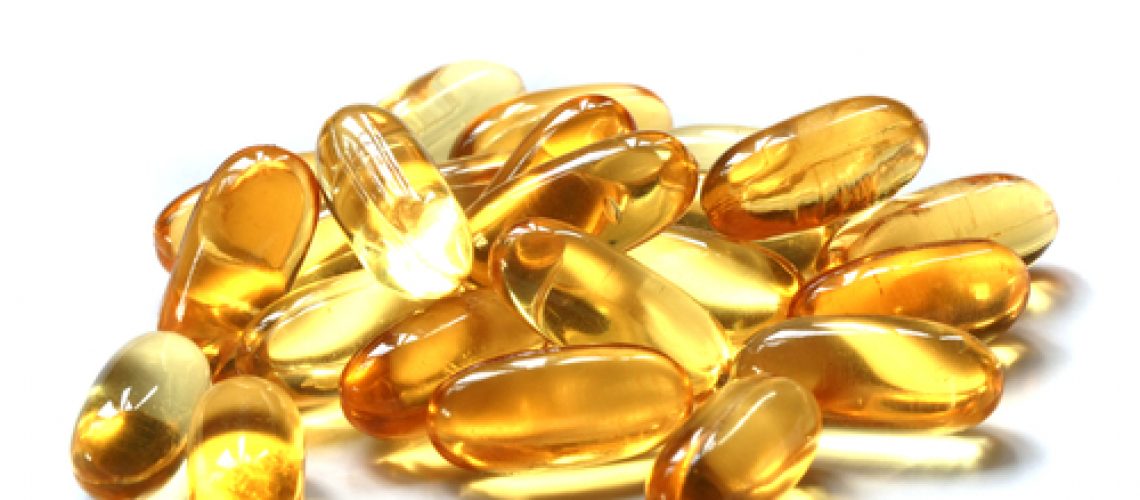
Contrary to past inferences from observational studies, which seemed to indicate a lower incidence of cardiovascular disease and cancer among people who consumed larger amounts of fatty fish from the North Seas (salmon, mackerel, tuna, herring, sardines, etc.) known to be rich in omega-3, fish oil or targeted supplements, the results of the VITAL study showed no difference in incidence for either group of diseases between those taking omega-3 (at a dosage of 1 mg/day) and vitamin D3 (at a dosage of 2,000 IU/day) and those taking preparations similar in appearance but completely inert biologically (placebo).

Even deepening the analysis and focusing on individual aspects, supplementation with omega-3 and vitamin D3 resulted in effects entirely superimposed on placebo, with comparable rates of overall cardiovascular events, stroke, death from cardiovascular causes, death from oncological causes, and death from all causes. The only favorable data concerned myocardial infarction rates, which were slightly lower among those taking omega-3, and side effects, which were similar for omega-3 and placebo (indicative of the harmlessness and good tolerability of supplementation, but not sufficient to justify its use).

But how is it possible that what seemed useful until yesterday is no longer useful today? As mentioned, until now, the benefits associated with omega-3 supplementation for primary prevention had been highlighted mainly in observational studies, that is, comparing the incidence of cardiovascular disease and cancer in populations that were or were not taking these essential fatty acids for various reasons, but without prior patient selection criteria or standardization of administration for timing, mode and dosage.

Studies of this kind can provide insights into the potential effects of a substance or drug in the body, which must, however, be confirmed in the context of double-blind randomized controlled trials, in which two groups of patients with overlapping characteristics and exposed to comparable conditions are randomly assigned to take either the active treatment or the inactive placebo and monitored for a predefined period of time. Only such studies, such as the VITAL study, can provide reliable information about the effects of a drug or other preventive or therapeutic intervention.

The outcomes of the VITAL study deserve special attention because they were obtained on a very large population (nearly 26 thousand people) and of different ethnicities (although all of them are residents of the United States), being, therefore, decidedly robust.

On the other hand, the new data are not inconsistent with those obtained in the late 1990s as part of the GISSI – Prevention study, conducted by the Italian Group for the Study of Survival in Myocardial Infarction. This “landmark” trial had, in fact, clearly demonstrated the preventive benefits of omega-3 supplementation in patients who had already had a first heart attack and were, therefore, at increased risk of experiencing a second one (secondary prevention).

Source

  • Manson JE et al. Marine n-3 Fatty Acids and Prevention of Cardiovascular Disease and Cancer. N Engl J Med 2019;380:23-32
  • Keaney JF, Rosen CJ. VITAL Signs for Dietary Supplementation to Prevent Cancer and Heart Disease. N Engl J Med 2019;380:91-92
  • Italian Group for the Study of Survival in Myocardial Infarction. Dietary supplementation with n-3 polyunsaturated fatty acids and vitamin E after myocardial infarction: results of the GISSI-Prevenzione trial. Lancet 1999;354(9177):447-55.

FEATURED SPECIALISTS

  • Profile picture of Dr. Fabio Fabi

    Sports Doctors, Internist, Basic Doctors

    • Via Sarsina 147 - Roma
    phone
  • Profile picture of Dott.ssa OLGA PETROVSKAIA

    Pain therapists, Basic Doctors, Therapist

    • Via Giulio Romano 3 - Valle Martella
    phone
  • Profile picture of Dott.ssa Erminia Maria Ferrari

    Homeopathic Medicine, Basic Doctors, Pediatricians

    • Via San Carlo 3 - Castel Rozzone
    phone
  • Profile picture of Dott.ssa Federica Filigheddu

    Basic Doctors

    • Via Barcellona
    • 213
    • 07026 Olbia
    • SS
    • Italia
    phone
  • Profile picture of Dott.ssa Maria Grazia Caruana

    Aesthetic Doctors, Basic Doctors

    • Viale Prassilla 41 - Roma
    phone

RELATED ARTICLES

Methods of poisoning: cardioactive glucosides

Overdose of these drugs is chronic and is almost always due to careless treatment. The reactions can be seen as an exaggerated expression of their pharmacological properties. Once toxic levels

Pro-arrhythmic drugs: more attention needed

Congenital long QT syndrome is a cardiac condition present from birth that essentially consists of a “repolarization defect,” that is, an electrophysiological alteration that results in a lengthening of the

Vaccines, it is alarm throughout Italy

The situation in Italy regarding the vaccines: almost in all regions there is less than 95 percent coverage, a threshold that does not guarantee herd immunity. The past few days

Over-the-counter drugs: are you using too many?

” Over-the-counter” or OTC (short for Over-The-Counter) drugs are valuable remedies to alleviate many common, annoying but not serious ailments that can occasionally occur in daily life, without having to

Drug allergies: uncommon, but not rare

When taking a drug, alongside the desired therapeutic effects, one may experience one or more discomforts related to characteristic and non-eliminable side actions of the active ingredients it contains or

RELATED PATHOLOGIES

Shock, medical emergency

It may happen that the circulation of blood through the body undergoes a sudden change giving rise to a condition of physiological shock, with decreased flow and crisis on the

Deep vein thrombosis (DVT)

Deep vein thrombosis (DVT) occurs when a clot (thrombus) forms within a vein and completely or partially occludes it, blocking or restricting blood flow in that vessel. In principle, any

Jugular stenosis

Jugular stenosis corresponds to a narrowing of the lumen of the jugular veins, which are the main blood vessels that collect oxygen-poor blood from the brain and return it to

Cardiac Echodoppler

The echocardiogram, also known as echocardiography, is a diagnostic imaging technique based on the use of ultrasound, which is quick and easy to perform, harmless, painless, and low-cost, and because

Aortic aneurysm

An aortic aneurysm refers to permanent dilatation of a well-defined segment of the aorta, the largest artery in the body that receives blood directly from the left ventricle and distributes

Blow to the heart

A “heart murmur” is not in itself a pathology , but merely a signal that the blood inside the heart is flowing too fast or in a “disordered” manner, producing

Mitral valve repair

Repair of an insufficient/deteriorated mitral valve can be done: Removing the malfunctioning segments of the valve leaflets; implanting “synthetic cords” (which replace the broken or “stretched” natural ones of the

Heart failure (acute)

Acute Heart Failure (AHF) is a potentially life-threatening clinical condition that can result from the worsening of an already diagnosed chronic heart failure (heart failure) or represent its onset event.

Cellulite

Cellulite is an inflammatory-based alteration of the fat-rich subcutaneous tissue(panniculus adiposus), triggered by fluid stagnation due to poor venous and lymphatic circulation (lymph is a fluid that flows in channels

Angina pectoris

Referred to by the Latin name for its main manifestation, a weight-like or vice-like tightness in the chest, angina pectoris is not a disease per se, but the consequence of

FEATURED SPECIALISTS

  • Profile picture of Dott.ssa Anna Puccio

    Gynecologists, Basic Doctors

    • Via Vincenzo Ponsati 69 - Volvera
    phone
  • Profile picture of Dr. Roberto Zaffaroni

    Basic Doctors, Therapist

    • Via San Francesco D' Assisi 5 - Varese
    phone
  • Profile picture of Dr. Sergio Ettore Salteri

    Basic Doctors, Chiropractors, Posturologists

    • Via Vial di Romans 8 - Cordenons
    phone
  • Profile picture of Dott.ssa Cinzia Maria Zurra

    Basic Doctors, Aesthetic Doctors, Nutritionists

    • Viale Rimembranze 5 - Triuggio
    phone
  • Profile picture of Dott.ssa Maria Grazia Caruana

    Aesthetic Doctors, Basic Doctors

    • Viale Prassilla 41 - Roma
    phone

prenota il tuo videoconsulto in convenzione

Completa il form e sarai contattato dal personale medico specializzato

your advertising
exclusively ON
MY SPECIAL DOCTOR

complete the form and you will be contacted by one of our managers